A search for dental implants for women over 50 often begins with a reasonable question: does age, menopause or a bone-health diagnosis change the decision? Those details can be relevant, but none can answer the question alone. Age and sex cannot decide implant candidacy. A sound decision begins with the tooth or gap, the condition of the whole mouth, the proposed restoration, the person's health and medicines, and whether maintenance can continue for as long as the implant is present.
This guide is for decision support, not remote clearance for surgery. It does not assume that every woman over 50 is postmenopausal, has osteoporosis, takes HRT or wants the same type of restoration. It also does not treat normal ageing as a disease. Menopause is not a candidacy verdict, and neither an online photograph nor a screening call can establish the three-dimensional anatomy of an implant site.
The useful question is not “Which protocol is used for older women?” It is “What diagnosis, benefit, burden and uncertainty apply to this person, this site and this restoration?” The sections below show what an accountable assessment should cover, where osteoporosis and medicine evidence has limits, and which records make a second opinion or local handover possible.
For cross-border care, identify the legal treatment provider, named clinicians, clinic address, professional-registration route, direct clinical contact, complaint process and indemnity or insurance arrangements before sharing health information or paying. Travel coordination is not clinical clearance and must remain separate from dental consent.
Start with the decision, not a demographic label
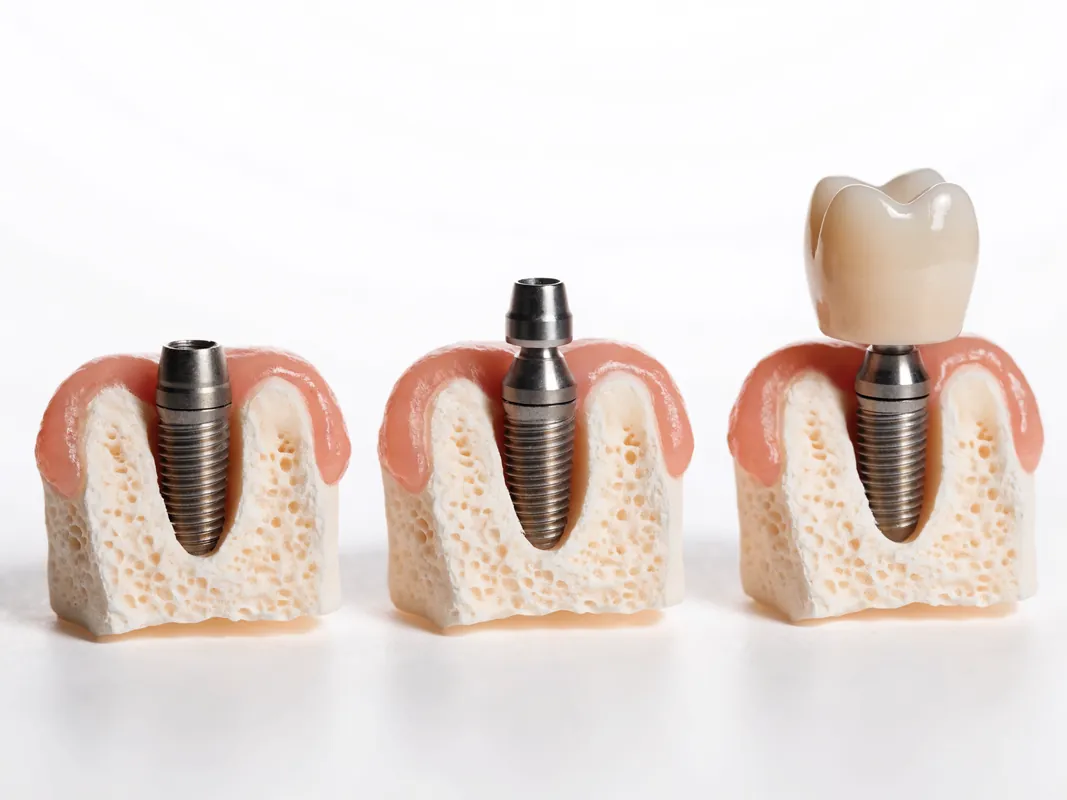
An implant is one way to support a crown, bridge or removable prosthesis after tooth loss. It is not a treatment for being over 50, for menopause or for a low DEXA score. Before discussing surgery, the dentist should identify the problem that the proposed restoration is meant to solve. Is a tooth genuinely unrestorable? Is the gap affecting chewing, speech, appearance or confidence? Is a loose denture the principal problem? Could treatment improve function enough to justify surgery, cost, maintenance and travel?
The answer may differ for one missing tooth, several missing teeth and an edentulous arch. It may also change if a painful tooth can be preserved, if active gum disease is present, or if the proposed full-arch design would be difficult to clean. A person should be able to compare the expected benefit with the burden of investigations, provisional work, surgery, healing, later prosthetic visits and lifelong reviews.
The assessment should therefore begin with goals in the patient's own words. A clinician can then distinguish essential disease control from elective replacement and cosmetic preferences. That prevents a demographic page from turning into a pre-selected treatment package. For an overview of the procedure itself, see the dental implant treatment page, then return to the individual questions in this guide.
Preserve restorable teeth before planning an implant
An implant replaces a missing tooth or supports a prosthesis; it does not make extraction beneficial by itself. If a tooth remains, the first irreversible decision is whether it can reasonably be retained. The record should distinguish caries, crack or fracture, pulpal and apical disease, periodontal support, mobility, furcation involvement, remaining sound structure, existing restorations, symptoms, strategic value and the patient's ability to maintain it. A photograph, sales call or panoramic image alone cannot establish that a tooth is hopeless.
Reasonable preservation pathways may involve repair, direct or indirect restoration, endodontic treatment or retreatment, periodontal treatment, splinting in a justified plan, or review by a clinician with relevant expertise. None is automatically preferable, and retaining a tooth can carry its own uncertainty, cost and maintenance. The decision should compare those burdens with extraction, surgery, provisional replacement, implant restoration and long-term peri-implant care using consistent definitions rather than contrasting tooth “success” with implant “survival”.
For several questionable teeth, request a tooth-by-tooth prognosis. A full-arch proposal should not convert every remaining tooth into one undifferentiated diagnosis. Ask which teeth are maintainable, which require disease control, which genuinely cannot be restored and how a removable or staged design would change if selected teeth were kept. Extraction to simplify a package, match a flight or create symmetry is not a clinical indication.
No immediate replacement can also be a reasonable option for a selected stable space when function, opposing teeth, adjacent teeth and patient priorities support monitoring. Observation needs baseline records and review triggers; it is not abandonment. New pain, movement, food trapping, caries, periodontal change or altered function should prompt reassessment.
What being over 50 does and does not tell a dentist
A birthday gives almost no information about the condition of a particular implant site. Two people of the same age may have different periodontal histories, tooth-loss causes, jaw shapes, medical conditions, medicines, smoking exposure, dexterity and access to follow-up. Conversely, a fit person at an older age may have fewer practical limitations than a younger person with uncontrolled disease or no maintenance plan.
Age can still prompt useful questions. The clinician may ask about frailty, falls, nutrition, ability to tolerate a long appointment, manual dexterity, memory, transport, caring responsibilities and who could help with cleaning if independence changes. These are functional questions, not stereotypes about women. They matter most when a complex fixed bridge is being considered because a restoration that cannot be cleaned or serviced may become a burden.
The ITI consensus on advanced age found no basis for using age alone to exclude implant therapy, while also stressing functional dependency, hygiene and future care. That is a more defensible boundary than an age cut-off. It does not promise that treatment is appropriate. It says the decision must be based on individual benefit, risk, treatment burden and maintainability.
Menopause is context, not a candidacy verdict
Menopause describes a life stage, not the anatomy of the mouth. It may be relevant to a medical history because it can coincide with changes in systemic bone health, HRT decisions, sleep, comfort or other treatment. It should not be used to infer that jaw bone is inadequate or that healing will follow a fixed timetable. The assessing clinician needs findings from the mouth and the proposed site rather than a conclusion drawn from sex hormones alone.
Some people report dry mouth, altered taste, oral burning or mucosal discomfort around midlife. Those symptoms deserve ordinary diagnosis. Medicines, dehydration, diabetes, autoimmune disease, oral infection, denture friction, anxiety and other causes may need consideration. A clinician should not label a symptom “menopausal” without assessing alternatives, and an implant does not treat dry mouth or burning mouth. Reduced saliva can make plaque control, caries prevention and comfort more demanding, so the cause and a realistic care plan matter before a complex restoration is chosen.
Menopause timing does not supply an automatic waiting period. The dentist should instead assess active disease, current symptoms, relevant medical care and whether the patient can understand and sustain the proposed pathway. If a menopause clinician is reviewing systemic treatment, dental planning should not overtake that prescriber's role.
Osteoporosis and jaw anatomy are different questions
Osteoporosis is a systemic skeletal condition associated with fracture risk. An osteoporosis or osteopenia diagnosis can be relevant to medical history and medicines, but it is not a map of the proposed implant site. The jaw has its own anatomy, tooth-loss history, cortical boundaries, sinus or nerve relationships, infection history and local loading conditions. A hip or spine result cannot tell a surgeon the width, height or shape of bone at one missing tooth.
Research on osteoporosis and implant outcomes is not a licence for a universal yes or no. A 2023 systematic review found no clear difference in implant survival in the pooled evidence but reported a possible difference in marginal bone change; the certainty was low or very low and the included studies had limitations. A later taskforce review of people receiving osteoporosis antiresorptives also described a weak recommendation based on very-low-certainty evidence. These findings support careful assessment and honest uncertainty, not a guaranteed result.
The clinician should record the actual osteoporosis diagnosis, fracture history and the professional managing it. The exact medicine history may matter more to dental planning than the label alone. Cancer-related bone medicines can involve different doses and clinical contexts from osteoporosis treatment, so the indication must never be guessed from a drug name.
DEXA and dental imaging answer different questions
A DEXA scan helps medical teams assess systemic bone density and fracture risk. DEXA does not measure the implant site. It should be requested because a medical professional judges it appropriate for bone health, not ordered automatically by a dental tourism webpage because a patient is over 50. NHS guidance describes DEXA use in the context of fracture risk factors and also explains its limitations.
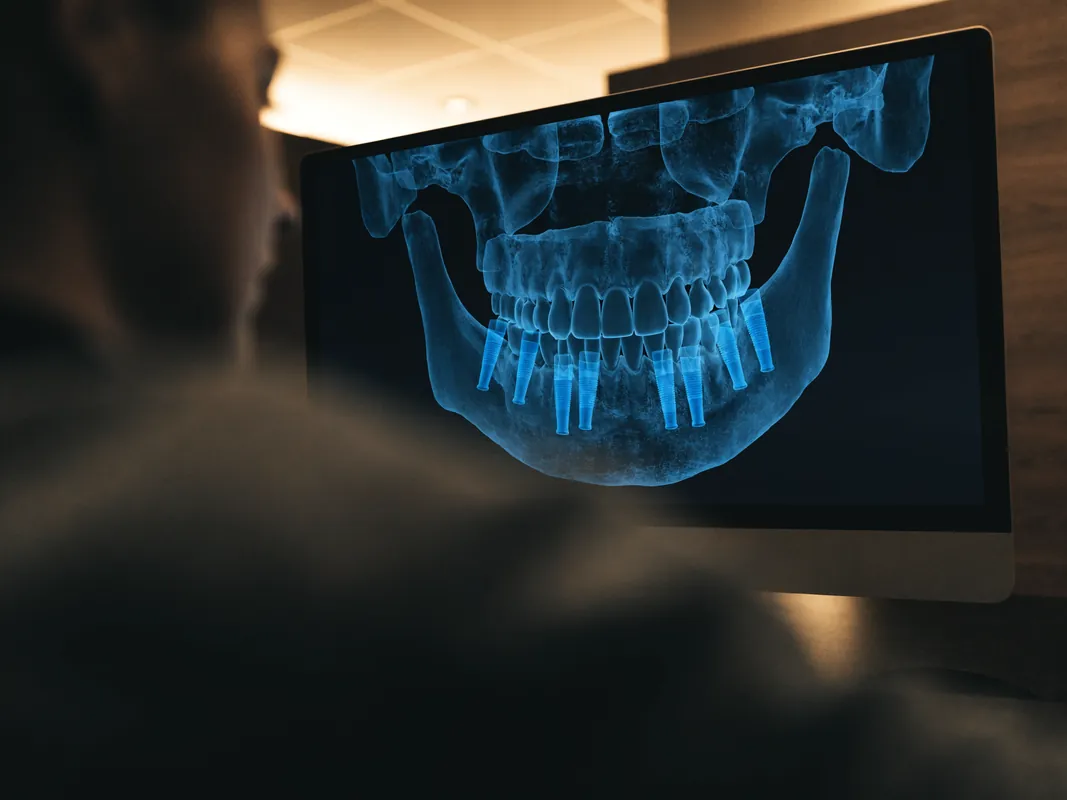
Dental assessment begins with history and clinical examination. Appropriate two-dimensional radiographs may help assess teeth, periodontal bone levels and disease. Cone-beam CT may be justified when three-dimensional information would change implant or graft planning and when the expected diagnostic benefit outweighs radiation exposure. It should not be treated as a sales scan or taken merely to generate a remote quote. The responsible clinician must select the field of view, interpret the full captured volume and retain the report.
Blood tests have a similar boundary. A result may be relevant when a medical condition, medicine, symptom or planned procedure creates a clinical question. There is no universal DEXA scan, blood test or laboratory threshold that approves women over 50 for implants. CTX and other bone-turnover markers should not be sold as a switch that predicts MRONJ or makes surgery permissible. If a test is proposed, ask which decision it will inform, who will interpret it and what would change if the result is abnormal.
The 2026 ADA–AAOMR clinical recommendations reinforce an examination-led approach to radiography. Existing suitable images should be reviewed, and every new exposure should answer a defined question. For implant planning, the clinician may need three-dimensional information about ridge form, adjacent roots, the mandibular canal, mental foramen, lingual anatomy, maxillary sinus or other structures. That does not make a CBCT a universal screening scan for everyone over 50.
The report should identify who prescribed the image, the field of view, who interpreted the full captured volume and which finding changed the plan. A scan can help assess anatomy and restorative feasibility, but it cannot measure manual dexterity, motivation, periodontal stability, mucosal comfort, consent or the ability to clean a proposed bridge. Surgical guides and digital plans may help transfer a planned position; they do not remove anatomical uncertainty or guarantee placement and loading.
HRT: do not infer an implant advantage
HRT is prescribed and reviewed for menopause-related indications using an individual discussion of benefits, risks, formulation, dose, duration and personal factors. NICE NG23 places those decisions with an appropriate healthcare professional. A dentist should record the exact product and current use because a complete medicine history matters, but should not present HRT as an implant treatment.
The dental evidence is inconsistent. A systematic review by Chaves and colleagues found very low evidence and conflicting reports for periodontal and implant outcomes. Its practical conclusion was that the evidence does not support starting HRT for periodontal or implant purposes. Later literature has not created a simple HRT-positive or HRT-negative implant category.
Do not start, stop or alter HRT for dental treatment on the basis of this page. Questions about HRT belong to the prescribing clinician; questions about the dental procedure belong to the treating dentist. They may need to communicate when the wider medical history affects the proposed intervention, but neither role should be replaced by a coordinator.
Antiresorptive medicines and MRONJ
Bisphosphonates, denosumab and some other medicines can be associated with medication-related osteonecrosis of the jaw, usually shortened to MRONJ. This is uncommon in osteoporosis care but serious enough to require an accurate history, risk discussion and documented plan. The possibility is not confined to one brand, one route or one sex.
The dental clinician needs the exact medicine, indication, route, dosing schedule, start date, duration and most recent administration. Previous exposure remains relevant. Other factors can change the assessment, including cancer therapy, glucocorticoids, antiangiogenic medicines, active oral infection, periodontitis, smoking and the extent of bone-impacting surgery. SDCEP therefore separates lower- and higher-risk contexts rather than treating every antiresorptive prescription alike.
MRONJ risk must be discussed alongside the benefit of the osteoporosis or cancer treatment and the consequences of untreated dental disease. The dentist should consider whether a tooth is maintainable, whether a less invasive option meets the goal, and whether specialist input is needed. A serum marker cannot remove uncertainty. Routine antibiotic or antiseptic use solely to prevent MRONJ should not be invented by a webpage; prescribing requires a clinical indication and current guidance.
Evidence is evolving. The 2025 International ONJ Taskforce review suggested that osteoporosis antiresorptive therapy need not be stopped before implant placement, but labelled the recommendation weak and the evidence very low in certainty. That statement does not cover every oncology regimen, every comorbidity or every surgical plan. The SDCEP and AAOMS materials also emphasise individual context and uncertainty around drug holidays. For a deeper, medicine-specific discussion, use the bisphosphonate and implant guide.
Never stop, delay, skip, start or change an antiresorptive medicine because of an online guide, quotation or travel date. The prescribing clinician and treating dental clinician must decide whether coordination is needed and document the responsibility for any change.
Cancer history and antiangiogenic therapy need a separate pathway
A history of cancer does not produce one implant answer. The diagnosis, current disease status, treatment site, radiotherapy field and dose information where relevant, chemotherapy, steroids, immune effects, antiresorptive or antiangiogenic exposure, healing history and current oncology plan can materially change the question. “Cancer survivor” and “in remission” are not sufficient medicine records, and a coordinator should not infer risk from appearance or elapsed calendar time.
AAOMS and SDCEP distinguish higher-risk oncology contexts from routine osteoporosis care. AAOMS advises against implant placement in oncology patients receiving parenteral antiresorptive or antiangiogenic treatment, while individual situations still require the responsible dental and oncology teams to review the actual indication and alternatives. This boundary should not be diluted into a generic claim that one brand or route is safe. Previous head-and-neck radiotherapy raises different anatomical and healing questions and may require specialist assessment rather than routine implant planning.
The dental team should ask for relevant oncology and medicine records with permission and define the proposed procedure precisely. Tooth preservation, non-surgical restoration, bridgework, a removable prosthesis, modification of an existing denture, accepting a space or deferring elective care may reduce or avoid bone-impacting surgery in some circumstances. Those alternatives still need oral-disease control and a maintainable design.
Active swelling, exposed bone, a non-healing site, pus, altered sensation, persistent ulceration or unexplained pain needs direct assessment; it should not be labelled MRONJ or dismissed through messages. Diagnosis and staging belong to an appropriately qualified clinician. The medicine-related implant guide can organise questions but cannot replace oncology or oral-surgery responsibility.
Denosumab timing belongs to the prescriber
Denosumab deserves a separate warning because an unplanned delay or cessation can create systemic harm. The MHRA has reported an increased risk of multiple vertebral fractures after stopping or delaying ongoing osteoporosis treatment and tells patients not to stop without specialist review. Dental scheduling must not silently become a medicine instruction.
The patient should give the dentist the indication, dose schedule, last administration and prescriber's details. The dentist should define the proposed bone-impacting procedure and its urgency. The prescriber can then weigh fracture protection, medicine timing and alternatives in the person's actual context. A clinic coordinator should not create a dosing interval, and a patient should not move an injection simply to fit flights.
Other medicines and health conditions
A complete, current medicine list is more useful than a women-over-50 checklist. It should include prescribed medicines, injections, inhalers, non-prescription products and supplements, with allergies and previous adverse reactions. The reason for each important medicine matters. A drug used for osteoporosis may have a different dental meaning from a higher-dose regimen used in cancer care.
The dentist should ask about conditions that may influence diagnosis, bleeding, infection, healing, anaesthesia, positioning or aftercare. Examples include diabetes, cardiovascular disease, kidney or liver disease, immune suppression, thyroid disease, bleeding disorders, previous head-and-neck radiotherapy, previous MRONJ and recent major illness. This is not a claim that any diagnosis automatically rules treatment in or out. The relevant question is whether the condition is stable, what the treating medical team advises, and how the proposed procedure changes the balance.
Anticoagulants and antiplatelet medicines require procedure-specific planning. Abrupt self-discontinuation can cause harm, while ignoring bleeding risk is also inappropriate. The dental clinician should use current dental guidance and contact the prescriber when the situation falls outside routine management. The same principle applies to steroids, immunomodulators and diabetes medicines: do not borrow instructions from another patient's plan.
Calcium, vitamin D and thyroid tests should not be bundled as a gender package. A medical professional may investigate deficiency or endocrine disease when history and guidelines indicate it. Supplements can interact with medicines or be unsuitable in some conditions, so an implant webpage should not prescribe them. Good nutrition is relevant to general health, but a supplement cannot correct poor implant position, active infection or an unmaintainable restoration.

Diabetes, smoking and dry mouth are individual risk questions
Diabetes should be recorded by type, treatment, recent clinical context and the professional responsible for care. A website should not set one laboratory number that grants or refuses surgery. The dental clinician needs to understand disease stability, hypoglycaemia risk where relevant, infection and healing considerations, appointment and eating plans, and whether medical coordination is required. Prescribed diabetes medicine must not be changed to fit fasting, travel or an assumed dental protocol without the responsible clinical plan.
Smoking and nicotine exposure matter because they can be associated with periodontal and peri-implant risk, wound-healing concerns and future maintenance. The record should identify cigarettes, vaping or other nicotine use without moral judgement. Cessation support can be offered through appropriate health services, but a fixed abstinence period must not be marketed as a guarantee that an implant will integrate. If the person continues to smoke, the clinician should explain how that affects the option comparison and monitoring rather than conceal the uncertainty.
Dry mouth is not automatically caused by menopause. Medicines, dehydration, diabetes, autoimmune disease, previous radiotherapy, anxiety, mouth breathing and other causes may contribute. It can increase caries risk for remaining teeth, affect mucosal comfort and denture tolerance, and make plaque control around complex prostheses harder. Diagnosis, prevention and a realistic daily-care plan should precede a restoration that is difficult to access. Persistent oral burning, ulceration or taste change also deserves assessment instead of being grouped under age.
These factors interact. A history of periodontitis plus smoking, dry mouth or diabetes may create a different maintenance burden from any factor alone. The aim is not to score a woman against a stereotype but to identify modifiable disease, design a cleanable restoration, explain residual uncertainty and agree who will review the mouth near home.
Oral disease control before implant treatment
The strongest modifiable questions are often in the mouth. The assessment should document plaque control, gum inflammation, periodontal probing, tooth prognosis, caries, endodontic disease, occlusion, mucosal health and any existing implants or prostheses. The cause of tooth loss should be understood. Replacing a tooth without addressing active periodontitis or an inaccessible cleaning routine carries the original problem forward.
SDCEP periodontal guidance identifies periodontitis history, smoking, diabetes, inadequate hygiene and poor maintenance attendance as relevant peri-implant disease factors. It recommends controlling active disease where possible and designing restorations that allow cleaning and inspection. These points apply to any adult; they are not female-specific.
Disease-control milestones should be written before irreversible treatment. A patient should know what needs to improve, how it will be reassessed and what happens if the target is not reached. That may mean stabilising periodontal disease, repairing decay, reviewing a questionable tooth or changing the prosthetic design. It does not mean promising that good brushing removes every biological or mechanical risk.
Compare implants with reasonable alternatives
Consent requires more than a single implant quotation. Depending on the diagnosis, alternatives may include preserving and restoring a tooth, a conventional bridge, an adhesive bridge, a removable partial denture, a complete denture, a different implant-supported design, accepting the space, or deferring elective treatment. Each has trade-offs in tooth preparation, surgery, cleaning, repairability, comfort, cost and future flexibility.
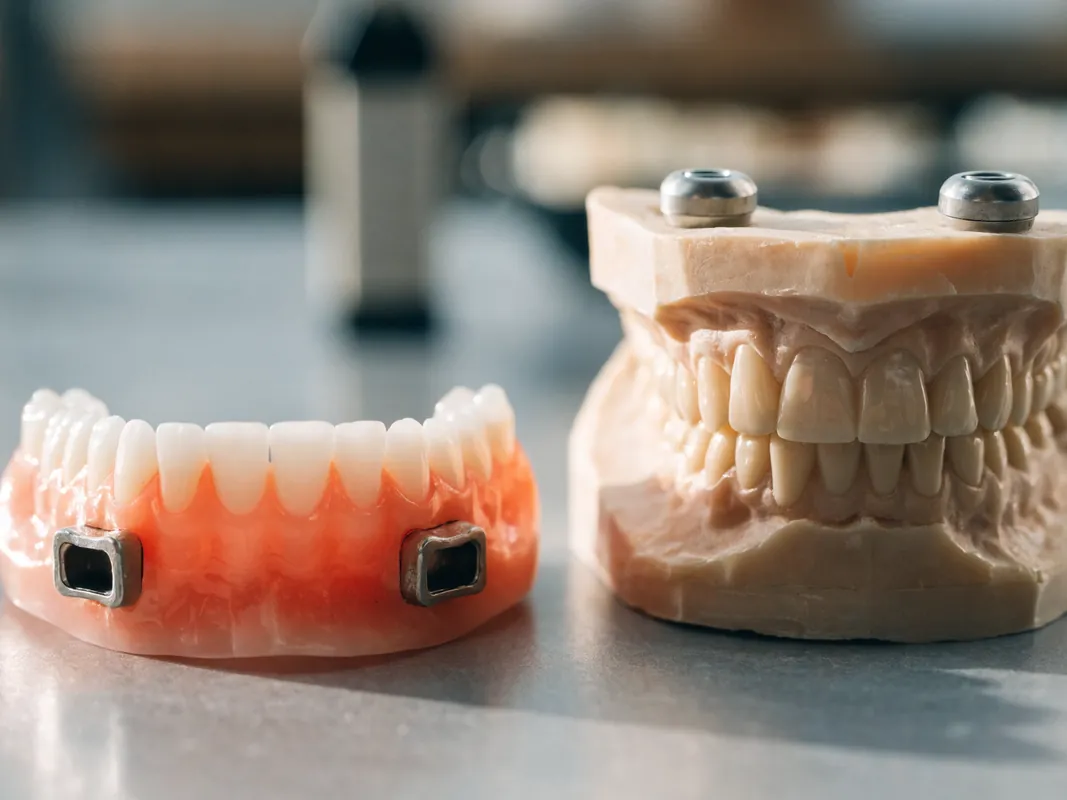
For a person with extensive tooth loss, a fixed full-arch bridge may sound attractive but can bring greater surgical and maintenance burden. A removable implant overdenture may use fewer implants and may be easier for some people or carers to clean, while still requiring professional review and component maintenance. The best comparison depends on anatomy, dexterity, preferences and available support, not a generic hierarchy of “premium” treatments.
A questionable tooth should not be extracted merely to simplify a package. Ask for the diagnosis and prognosis, what would be involved in retaining it, and how the plan changes if surgery or grafting proves unsuitable. The option of no immediate replacement should be discussed where clinically reasonable.
Plan the restoration before surgery
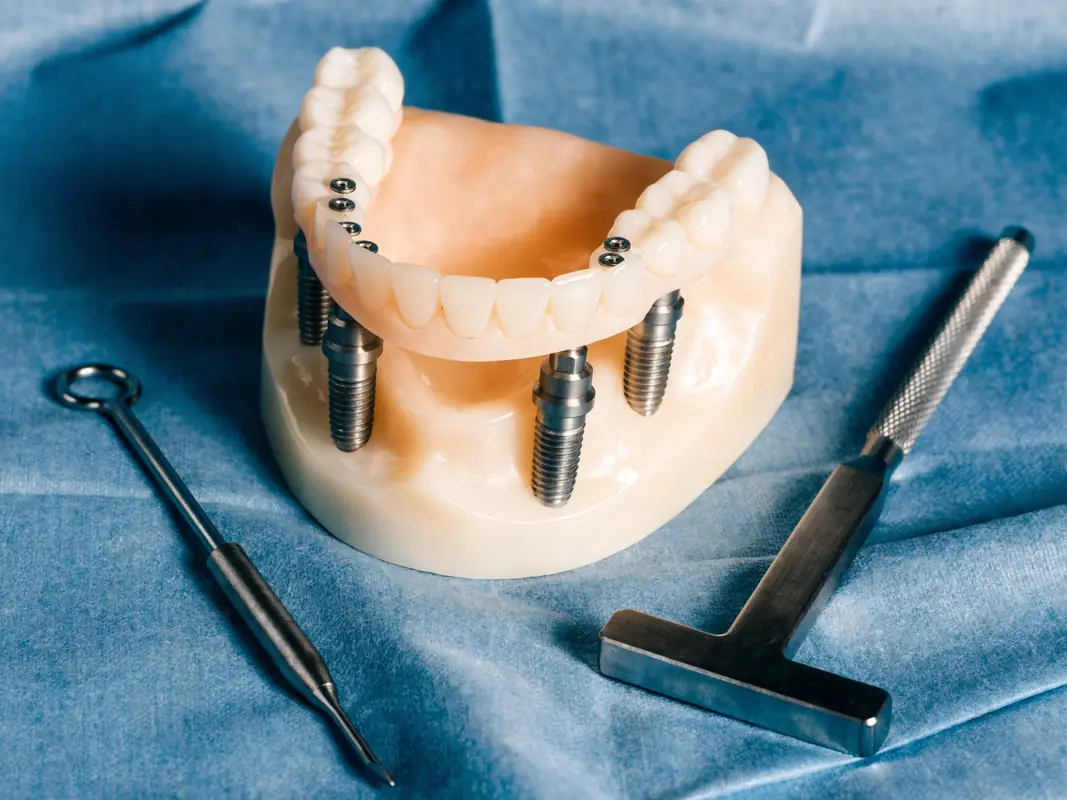
Implant planning is prosthetically driven: the final tooth position, bite, cleansability and repair pathway should guide whether and where an implant is considered. A three-dimensional image alone does not design a usable tooth. The clinician should assess space, jaw relationships, smile and lip support, opposing teeth, parafunction, restorative materials and access for hygiene.
For a single missing tooth, the plan should protect neighbouring structures and create a crown that can be cleaned. For several teeth, the number and distribution of implants, bridge span and retrievability matter. For a full arch, the patient needs to understand whether the provisional and definitive prostheses are fixed or removable, how tissue changes will be managed, and which parts may wear or need repair.
Low systemic bone density does not automatically dictate a wider implant, a named surface or a fixed healing period. Implant dimensions, grafting, loading and healing are site- and case-specific clinical decisions. If primary stability or anatomy differs from the provisional plan, the clinician should pause, explain the options and renew consent rather than forcing a promised timetable.
The written plan should distinguish diagnostic assumptions from confirmed findings. It should identify possible grafting, temporary teeth, stages, review points and reasons a later stage might change. A remote estimate can be useful for orientation, but it should be labelled provisional until the named clinician has examined the patient and the necessary records.
Surgery, loading and definitive restoration are separate decision gates
Extraction, implant placement, grafting, connection of a provisional restoration, functional loading and delivery of a definitive prosthesis are different clinical decisions. Combining them into “teeth in a day” or one healing promise hides the conditions that must be met at each gate. Menopause, age or a DEXA label does not supply a universal interval between those stages.
The provisional plan should state what is expected before treatment and what findings could change it. Extraction-site anatomy, infection, bone walls, soft tissue, surgical access, implant position and measured stability may support immediate placement in one case and a staged approach in another. A provisional may be removable, attached but kept out of functional contact, or loaded in a defined way. It is not automatically the definitive restoration and does not prove integration.
Before surgery, ask what happens if an implant cannot be placed in the intended position, if augmentation becomes more or less extensive, if stability is inadequate for the proposed provisional, or if a medicine or medical issue changes. The contingency may include a removable temporary, altered implant number or position, delayed restoration, a bridge or denture pathway, further assessment, or stopping. Costs, travel implications and consent for those branches should be visible before the patient is committed.
Readiness for the next stage should be determined from clinical findings, not a flight booking. The definitive restoration also needs its own review of tissue health, restorative space, bite, speech, hygiene access, materials, retrievability and repair pathway. If findings or patient preferences change, valid consent requires a renewed discussion. A cancelled or delayed stage is not automatically a treatment failure; it may be the safer response to uncertainty.

Maintenance, dexterity and future support
Implants need ongoing personal cleaning and professional implant-specific maintenance. SDCEP recommends regular review because plaque, inflammation, probing findings, prosthetic fit and bone changes may need monitoring. Recall frequency should be individual rather than a fixed schedule copied from a brochure.
The proposed design must be cleanable with the person's current dexterity and vision. Ask the patient to demonstrate how she would reach under a bridge or around an attachment. Arthritis, tremor, reduced grip, visual impairment or cognitive change may call for adapted brushes, a simpler restoration, carer involvement or a different option. These questions respect autonomy; they should not presume dependence from age.
Future support matters because health and circumstances can change. Who can remove or repair the prosthesis? Are components identifiable and available locally? Can a local dentist access the implant system and baseline records? If personal cleaning later requires help, has that possibility been discussed? The older-adult implant planning guide explores function, support and care burden in more depth without imposing an age cut-off.
Maintenance cannot guarantee permanence. Biological disease, screw loosening, fracture, wear, changes in the opposing dentition and general health can alter the plan. A responsible quote separates expected maintenance from any limited commercial warranty and explains exclusions in plain language.
Consent must be individual, non-discriminatory and continuing
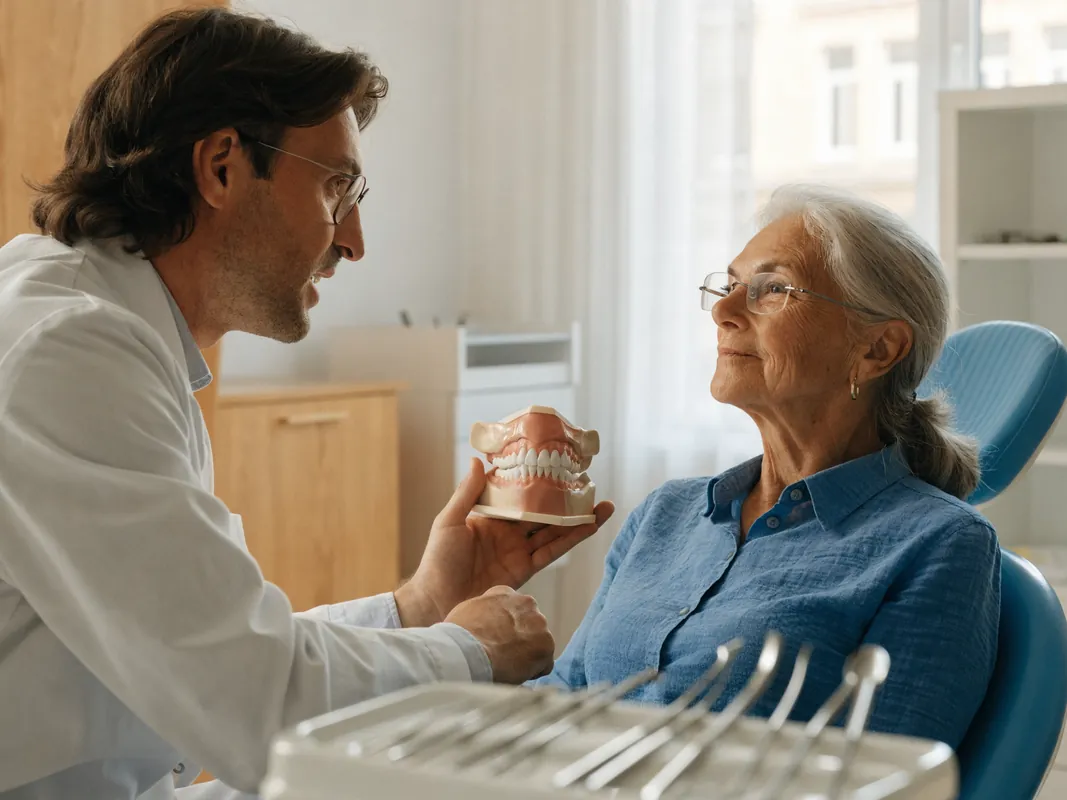
Consent should not assume that a woman wants treatment because of age, appearance, relationship status, work or a family opinion. The clinician should ask what matters to the patient, use language and communication support she can understand, allow questions and document the option to decline or defer. Being over 50 does not reduce autonomy, and possible future care needs should be discussed without treating current independence as temporary or irrelevant.
The conversation should separate disease treatment from elective replacement and cosmetic preferences. It should include the option of preserving teeth, no immediate replacement where reasonable, bridge and removable choices, implant surgery, augmentation where relevant, provisional stages, biological and technical complications, maintenance, costs and who manages problems. Benefits and burdens should be described for this person without using age or sex as a shortcut for risk or expected satisfaction.
Capacity is decision-specific and should never be inferred from age. Where a patient needs assistance with communication, dexterity or travel, support can be invited with permission without allowing another person to take over the decision. If cognition or capacity is genuinely in question, the responsible professionals must follow the applicable legal and ethical framework. A companion, coordinator or translator does not become the clinical decision-maker by attending.
Consent continues after the first signature. New imaging, changed anatomy, an altered medicine history, a different surgical plan, inability to load, a material change or unexpected maintenance burden should trigger explanation and a real chance to pause. The record should show what changed, which alternatives remained, what additional costs arose and what the patient decided. A deposit, package discount or return flight must not remove that choice.
Travel and aftercare
Travel is a separate decision from clinical suitability. Compare local care, staged travel and the no-travel option before paying deposits. Consider the number and purpose of visits, medical fitness for travel, mobility, insurance exclusions, escort needs, time away from work or caring, and what would happen if the plan changes after examination.
The GDC's patient guidance on treatment abroad recommends assessment by a qualified dentist, a full medical history, questions about the treating professional, regulation, complication information, aftercare, complaints and who pays for unplanned travel or remedial work. These are due-diligence questions, not evidence that a particular overseas clinic is acceptable.
Before departure, obtain a named local urgent route and a written handover. Early problems may need the treating clinic, but swelling, persistent bleeding, fever, worsening pain, altered sensation, breathing or swallowing difficulty may require prompt local assessment rather than a flight or a messaging exchange. The implant aftercare guide explains monitoring questions; the clinician's personal instructions take priority.
No hotel, flight or transfer should be allowed to compress a clinical review or medicine decision. Non-clinical services, suppliers, dates, exclusions and cancellation terms should be confirmed separately in writing.
Records and itemised costs
Ask for the diagnosis, periodontal charting where relevant, clinical photographs, radiographs and reports, the options discussed, consent record and an itemised plan. Implant records should identify the manufacturer, system, dimensions, position and component details. Keep operative notes, graft or biomaterial identifiers, prescriptions, laboratory information, baseline images, prosthesis design, aftercare and the complaint route.
The quote should separate assessment, imaging, disease control, extraction, grafting, implant placement, provisional work, definitive prosthesis, sedation if proposed, reviews and maintenance. It should state what is provisional, what can change after examination, which repairs are excluded and who funds extra visits. Travel and accommodation belong in a separate non-clinical section.
Records are not paperwork for its own sake. They allow a second opinion, help a local dentist identify components, and show which professional owns each decision. GDC Principle 3 treats consent as an ongoing process and requires discussion of options, potential benefits, risks and costs.
Questions for the assessing clinician
Use questions that reveal reasoning rather than seeking a one-word approval:
- What is the diagnosis and prognosis of each tooth proposed for extraction?
- Which finding makes an implant preferable to tooth preservation, a bridge, a denture or no immediate replacement?
- How do my osteoporosis diagnosis, fracture history and exact medicines affect this specific procedure?
- What does my DEXA result answer, and what does it not show about the jaw site?
- Which dental images are justified, who will report them and how could they change the plan?
- Is there active periodontal or endodontic disease to control first?
- How will I clean the proposed restoration, and how will maintenance work at home?
- Who is the named clinician for surgery, restoration and complications?
- What could change after examination, and which costs would then change?
- What is the local urgent route after I return home?
A clinician who cannot answer yet should state which examination or record is missing. Uncertainty is safer than a confident remote promise.
Women over 50 implant assessment checklist
Before consenting, confirm that the record includes:
- the functional or aesthetic goal in your own words;
- the diagnosis, tooth prognosis and cause of tooth loss;
- periodontal, caries, mucosal and bite assessment;
- justified dental imaging with a report;
- osteoporosis or osteopenia history, fractures and treating professional;
- every current and previous antiresorptive or antiangiogenic medicine, including indication, route, schedule, duration and last administration;
- HRT and the rest of the medicine list without dental instructions to alter them;
- relevant conditions, allergies, smoking and previous healing problems;
- alternatives, including tooth preservation, removable options, deferral and no replacement where reasonable;
- the proposed prosthesis, cleaning access, component identity and repair pathway;
- staged decisions and what could change the plan;
- named clinical ownership for surgery, restoration, prescribing and aftercare;
- local maintenance and an urgent-care route;
- itemised clinical costs and separate travel terms;
- copies of records for a second opinion and handover.
The checklist does not approve treatment. It helps expose missing information before an irreversible step.
Sources and review dates
The evidence has different scopes. NICE and NHS sources guide UK menopause or bone-health care; SDCEP and GDC material sets UK dental decision boundaries; MHRA addresses a medicine safety issue; ITI and peer-reviewed reviews summarise implant evidence. None can assess an individual remotely.
- NICE NG23, Menopause: identification and management, published 12 November 2015, last updated 15 April 2026 and accessed 29 August 2026: individualised HRT discussion and review. https://www.nice.org.uk/guidance/ng23
- NHS DEXA guidance, page last reviewed 5 October 2022 and accessed 29 August 2026: systemic bone-density and fracture-risk uses and limitations. https://www.nhs.uk/tests-and-treatments/dexa-scan/why-its-done/
- NHS osteoporosis treatment guidance, accessed 29 August 2026: treatment context, osteoporosis medicines, calcium and vitamin D advice, and the rare jaw-osteonecrosis issue. https://www.nhs.uk/conditions/osteoporosis/treatment/
- ADA and AAOMR clinical recommendations for dental radiography and CBCT, published January 2026 and accessed 29 August 2026: history- and examination-led imaging, review of existing images, justification and judicious use of CBCT. https://pubmed.ncbi.nlm.nih.gov/41500761/
- SDCEP MRONJ guidance, published March 2017, reviewed and extant March 2024 and accessed 29 August 2026: medicine-history risk assessment, consent and oral-health management. https://www.sdcep.org.uk/published-guidance/medication-related-osteonecrosis-of-the-jaw/
- American Dental Association, Osteoporosis Medications and Medication-Related Osteonecrosis of the Jaw, accessed 29 August 2026: medicine indication, risk context, oral-health prevention, uncertainty around implant evidence and limits of CTX testing. https://www.ada.org/resources/ada-library/oral-health-topics/osteoporosis-medications
- American Association of Oral and Maxillofacial Surgeons, Medication-Related Osteonecrosis of the Jaw 2022 Update, accessed 29 August 2026: oncology boundaries, osteoporosis evidence limits, risk assessment and uncertainty around drug holidays. https://aaoms.org/wp-content/uploads/2024/03/mronj_position_paper.pdf
- MHRA denosumab safety update, published 26 August 2020 and accessed 29 August 2026: vertebral-fracture reports after stopping or delaying ongoing osteoporosis treatment and the specialist-review boundary. https://www.gov.uk/drug-safety-update/denosumab-60mg-prolia-increased-risk-of-multiple-vertebral-fractures-after-stopping-or-delaying-ongoing-treatment
- Ali and colleagues, International ONJ Taskforce systematic review and consensus statement, published 2025, with a weak recommendation based on very-low-certainty evidence, accessed 29 August 2026. https://pubmed.ncbi.nlm.nih.gov/40335186/
- Chaves and colleagues, HRT, periodontal and implant systematic review, published 2020 and accessed 29 August 2026: inconsistent findings and no evidence to prescribe HRT for periodontal or implant purposes. https://pubmed.ncbi.nlm.nih.gov/30739380/
- Lemos and colleagues, osteoporosis and implant outcomes systematic review and meta-analysis, published 2023 and accessed 29 August 2026: no clear survival difference in pooled data, possible marginal-bone findings and low-certainty limits. https://pubmed.ncbi.nlm.nih.gov/37043030/
- ITI consensus on advanced age and systemic conditions, published 2018 and accessed 29 August 2026: individual benefit, risk, function, hygiene and continuing-care considerations. https://academy.iti.org/academy/consensus-database/consensus-statement/-/consensus/effect-of-advanced-age-and-or-systemic-medical-conditions-on-dental-implant-survival/1816
- SDCEP periodontal guidance, second edition published November 2025 and accessed 29 August 2026: peri-implant disease factors, control of active disease, cleanable design and implant-specific maintenance. https://www.periodontalcare.sdcep.org.uk/guidance/dental-implants/risk-factors-for-peri-implant-disease/
- GDC Principle 3, Obtain valid consent, accessed 29 August 2026: options, potential benefits, risks, costs, understanding and ongoing consent. https://standards.gdc-uk.org/pages/principle3/principle3
- GDC going abroad for dental treatment guidance, accessed 29 August 2026: qualified assessment, medical history, provider checks, aftercare, complaints and unplanned costs. https://www.gdc-uk.org/standards-guidance/information-for-patients-public/going-abroad-for-dental-treatment
These sources support individual assessment and shared decision-making. They do not promise candidacy, choose a medicine schedule, select an implant, or replace the judgement of the professionals who hold the full record.
The safest decision is the one that remains understandable, maintainable and open to revision when new clinical evidence changes the plan.