Coeliac disease does not automatically qualify or disqualify someone from dental implant treatment. The condition is called celiac disease in US English. It is an immune-mediated condition triggered by dietary gluten, but the diagnosis does not describe one person's present nutrition, bone health, mouth, medicines or ability to maintain an implant restoration. The decision must be made for the individual and the proposed procedure.
This guide is for an adult with diagnosed or suspected coeliac disease who is researching implant assessment, including treatment abroad. It does not diagnose coeliac disease, grade disease control, issue medical clearance or predict an implant outcome. It also does not create a coeliac-specific surgical protocol. A message, photograph, antibody result or panoramic image cannot replace an examination by the clinician who will be responsible for care.
WeCare is not the treating dental provider. Its role is limited to enquiry and referral coordination and, if separately agreed, travel logistics only to the extent confirmed in writing. The named clinic and named clinician must own assessment, diagnosis, consent, treatment, prescriptions, records, complaints and clinical aftercare. Ask for their identities and direct clinical contact details before sharing health records or making a commitment.
For an overview of the procedure rather than the medical assessment, read the dental implant treatment page. Then return to this guide and compare the proposed plan with your own coeliac history, oral findings and follow-up needs.
Start with the diagnosis and current clinical picture
“I avoid gluten” is not the same clinical history as a confirmed diagnosis of coeliac disease. Some people have a specialist-confirmed diagnosis, some are still being investigated, and others have adopted a gluten-free diet for symptoms without a completed diagnostic pathway. Non-coeliac wheat sensitivity and wheat allergy are different conditions. Record the wording used by the clinician who made the diagnosis, how it was established, when it was made and which team now oversees care.
If coeliac disease is still suspected rather than confirmed, dental implant planning should not become an improvised diagnostic process. NICE NG20 explains that coeliac testing is affected by whether a person is eating gluten and advises specialist referral in defined situations. It also says not to start a gluten-free diet before diagnosis is confirmed by a specialist. Someone already restricting gluten who wants diagnostic clarification should speak to the appropriate medical team rather than deliberately changing diet because a dental webpage says so.
For a person with an established diagnosis, current context matters. Useful information can include persistent gastrointestinal symptoms, unexplained weight change, fatigue, recurrent mouth ulcers, a recent review, previous nutritional deficiencies, a history of fractures or diagnosed bone disease, and whether specialist follow-up is active. The absence of gut symptoms does not prove that all relevant issues have resolved, while the presence of symptoms does not show why they are occurring. Persistent symptoms may have several explanations and belong with the gastroenterology or coeliac care team.
Serology can form part of diagnosis and monitoring, but serology does not, on its own, establish dietary adherence or mucosal recovery. NICE explicitly advises against using serology by itself to determine whether gluten has been excluded. A dental booking decision should therefore not turn one tissue-transglutaminase result into a pass mark, a failure mark or a substitute for the person's wider medical picture.
What coeliac disease changes in an implant assessment
Coeliac disease changes the questions that should be asked; it does not supply the answer in advance. The assessment may need to clarify whether malabsorption, undernutrition, anaemia, low bone mineral density, persistent symptoms, another autoimmune condition or relevant medicine is present. None should be presumed from the label. Equally, a well person following an established care plan should not be assigned complications that have never been diagnosed.
The dental clinician still needs to answer ordinary implant questions: is the tooth actually non-restorable; is active infection present; are periodontal tissues stable; is there enough site-specific bone in the right position; can the restoration be designed for cleaning and repair; what are the surgical and restorative alternatives; and can aftercare be delivered? Coeliac information sits alongside those questions rather than replacing them.
The scale of treatment also matters. Replacing one tooth after a straightforward assessment is not the same undertaking as extractions, grafting and a full-arch restoration. Greater intervention may create more treatment burden, more components that need maintenance and a more demanding handover. It does not follow that a larger procedure needs a branded “coeliac protocol”; it follows that its necessity, staging and alternatives require closer explanation.
Avoid vague labels such as “controlled”, “stable” or “cleared” unless the person using them explains what evidence they mean. A gastroenterologist may be addressing persistent intestinal symptoms, a dietitian may be assessing dietary adequacy, and a dentist may be assessing local oral disease. Each professional owns a different question. A generic clearance note cannot transfer the treating dentist's responsibility for the implant decision.
Nutrition and deficiency assessment
Untreated coeliac disease can cause malabsorption. NHS information lists iron, vitamin B12 and folate deficiency anaemia, osteoporosis and, in severe cases, malnutrition among possible complications. Those are possibilities, not a diagnosis in every person with coeliac disease. The useful task is to identify what has actually been found, what remains unresolved and who is managing it.
Bring relevant results already obtained through usual care, together with the clinician's interpretation where available. Do not order a self-selected panel merely to satisfy a generic dental checklist. NICE recommends annual review and says that if concerns arise, a GP or consultant should assess the need for specific blood tests, bone assessment, specialist referral and review of complications or comorbidities. That approach is individual rather than a universal pre-implant list.
The dental clinician may need a focused answer if there is unexplained pallor, fatigue, weight loss, frequent ulcers, delayed recovery from previous procedures or another clinical concern. The question might be whether a known deficiency has been investigated and managed, whether symptoms warrant medical review before elective care, or whether eating will be difficult after a proposed procedure. Asking a focused question is more useful than demanding a value without knowing how it changes the plan.
Deficiency treatment belongs with the usual medical clinician or appropriately qualified dietitian. The implant provider should not prescribe a supplement programme merely from a website history, and the patient should not alter supplements to meet a booking date. Dose, formulation, interactions, tolerance and the cause of a deficiency all matter. A balanced gluten-free diet can also have practical constraints, so postoperative food advice should be compatible with the person's established dietetic plan rather than inventing a restrictive “healing diet”.
Bone health without assuming osteoporosis
Coeliac disease can be associated with reduced bone mineral density, particularly when diagnosis or effective dietary treatment has been delayed, but it is wrong to translate that association into “every coeliac patient has weak jawbone”. Systemic bone mineral density, the anatomy at a missing-tooth site and the mechanical demands on a restoration are related questions, not interchangeable measurements.
NICE says a GP or consultant should assess the need for a dual-energy X-ray absorptiometry scan when concerns arise; it does not make a dental website responsible for declaring that scan necessary for every implant enquiry. Existing diagnoses, fracture history, previous scan results, age, low body mass, menopause, steroid exposure, other conditions and current medical management may influence what the usual care team considers appropriate. The dental clinician should ask for medical input when the answer could change treatment, not use a blanket rule.
A panoramic radiograph or cone-beam CT image does not diagnose systemic osteoporosis. Conversely, a bone-density report does not map the three-dimensional anatomy of one implant site. The dentist uses clinical examination and justified dental imaging to assess site dimensions, neighbouring roots, anatomical structures, disease and restorative position. If additional imaging is proposed, ask what question it answers and how the result could change the options.
If osteoporosis or another metabolic bone condition has been diagnosed, disclose it together with every related medicine. Antiresorptive and antiangiogenic exposure creates a separate medication-related jaw-risk assessment; coeliac disease does not override that history. The bisphosphonate and implant guide explains that boundary without telling anyone to interrupt prescribed treatment.

Oral health and periodontal baseline
Coeliac disease has recognised oral associations, especially developmental enamel defects and recurrent aphthous ulcers. Reviews also describe dry mouth, tongue changes and other findings, but prevalence estimates and study quality vary. Existing enamel defects do not prove current dietary exposure, and adopting a gluten-free diet does not rebuild enamel that formed abnormally years earlier. Each tooth still needs an ordinary diagnosis based on symptoms, examination and appropriate imaging.
The periodontal question deserves similar restraint. A 2024 HUNT study of previously undiagnosed coeliac disease did not find greater severe radiographic periodontal bone loss and warned against extrapolating radiographs to a clinical diagnosis of periodontitis. That is useful because it challenges a simplistic claim that coeliac disease automatically causes gum-bone loss. It does not show that a particular person's gums are healthy.
Before implant placement, the clinician should examine plaque control, bleeding, probing findings, recession, mobility, remaining teeth, active caries, endodontic infection, occlusion and any mucosal lesion. Periodontitis and gingivitis should be diagnosed and managed to a stable endpoint appropriate for the person. The EFP peri-implant guideline supports risk assessment, management of modifiable factors and periodontal stability before implant placement.
Recurrent ulcers, dry mouth, burning, altered taste or tongue changes should not be brushed aside as “just coeliac”. Their pattern, duration, triggers, medicines, trauma and other possible causes may need review. An ulcer or patch that persists or worsens requires dental or medical assessment. If symptoms make cleaning or eating difficult, the treatment plan should address that burden before adding a restoration that demands lifelong maintenance.
What the implant evidence can and cannot say
Direct clinical evidence that isolates coeliac disease as a predictor of dental implant survival, integration or peri-implant disease is sparse. The sources reviewed for this page do not support a coeliac-specific success percentage, preferred brand, implant diameter, antibiotic course or automatic healing extension. Marketing copy should not fill those evidence gaps with precision that research has not established.
Broader reviews of implants in people with autoimmune or systemic diseases are heterogeneous. They combine different diagnoses, disease activity, medicines, procedures and follow-up, and coeliac-specific data may be absent or too limited for a separate conclusion. Findings from another autoimmune condition cannot simply be assigned to coeliac disease. Likewise, evidence about systemic bone density does not predict the result at one implant site.
The sound interpretation is modest: investigate factors that could matter in this individual, stabilise treatable oral disease, obtain relevant medical input and explain uncertainty. The fact that evidence is limited does not mean an implant must be refused. It also does not mean the procedure has been shown equivalent for every person with coeliac disease.
An honest written opinion should distinguish observed findings from assumptions. “There is adequate site anatomy on the available examination” is different from “coeliac disease will not affect healing”. “No deficiency is documented in the records supplied” is different from “nutrition is normal”. Ask the named clinician to show which facts support the recommendation, what remains uncertain and what alternative would be reasonable if uncertainty is unacceptable.
Medicines, supplements and comorbidities
Provide a complete current list: prescribed medicines, injections, over-the-counter products, vitamins, minerals and herbal products, plus allergies and previous adverse reactions. Include medicines taken for conditions that may coexist with coeliac disease rather than listing only digestive treatments. The clinician needs the exact product, reason, route and prescriber where relevant.
Some people with dermatitis herpetiformis or refractory coeliac disease may receive medicines with effects that need medical context. Others may have type 1 diabetes, autoimmune thyroid disease, liver disease, inflammatory conditions, osteoporosis, anaemia or unrelated cardiovascular and kidney conditions. The label “coeliac” must not hide those separate histories. Their relevance depends on the person's present health and the proposed procedure.
Medicines affecting clotting, immune function, bone turnover, adrenal response or infection management need clinician-led review. Proton-pump inhibitors, steroids, immunosuppressants, anticoagulants and antiresorptive medicines should not be grouped into a single internet rule. The dental clinician may need to ask the prescriber a focused question about the exact plan.
Do not stop, delay, skip or change any medicine, medication or supplement because of this guide, a travel booking or a non-prescribing coordinator. If a change is being considered, the responsible dental clinician and the prescriber should agree who decides, why, what alternatives exist and how the plan is documented. Coeliac disease alone does not supply a rule for a longer antibiotic course or preventive antimicrobial treatment.
Gluten exposure in dental care
For confirmed coeliac disease, a strict gluten-free diet is the main treatment. In a dental setting, the practical exposure question concerns items that may be swallowed or used in and around the mouth, not a vague fear that any surgical object triggers coeliac disease. Tell the clinic about the diagnosis and ask how it checks relevant oral products rather than accepting an unsupported blanket assurance.
Potentially relevant items can include prescribed oral medicines, dissolvable or chewable products, polishing paste, prophylaxis products, topical preparations, lip products and food or drinks offered around an appointment. Whether any one item contains a gluten source depends on its exact formulation and market. A familiar brand name is not enough because formulations can change.
Cross-contact in food preparation is a separate travel and nutrition issue. If eating will be limited after treatment, plan suitable foods with the person who manages the gluten-free diet and verify meals directly with the food provider. A clinic should not claim to medically certify a restaurant or accommodation kitchen. The patient also should not be pressured to accept an unfamiliar food as part of a treatment bundle.
Coeliac disease and wheat allergy are not the same. A product considered suitable for coeliac disease may still require a different assessment for someone with wheat allergy or another ingredient allergy. Record each diagnosis accurately so the dental and pharmacy questions are not conflated.
Dental medicines and product excipients
Medicine formulations vary by manufacturer, strength, dosage form and country. Coeliac UK states that the vast majority of prescribed medicines are gluten free, explains that a small number may contain wheat starch, and advises people with concerns to check with a pharmacist or GP. It also clearly says prescribed medicines should only be stopped under medical advice.
The European Medicines Agency publishes specific information on wheat starch containing gluten as an excipient and on package-leaflet labelling. In the UK, the MHRA product-information service can be used to find patient information leaflets and professional product details. Those sources are more reliable than assuming that every tablet with the same active ingredient has an identical formulation.
Before prescribing or supplying a dental medicine, the responsible clinician should record the coeliac history and check the exact product when a formulation question exists. Ask the pharmacist to verify the current patient leaflet or product information. If an alternative formulation is considered, the prescriber or pharmacist should advise it; the patient should not simply omit pain relief, antimicrobial treatment or any clinician-directed product.
Side effects can resemble symptoms attributed to gluten exposure, and symptoms after a procedure can have several causes. New diarrhoea, abdominal symptoms, rash or other concerns should be assessed in context rather than labelled remotely. A dental clinic cannot confirm gluten exposure from symptoms alone.

Implant, graft and restorative materials
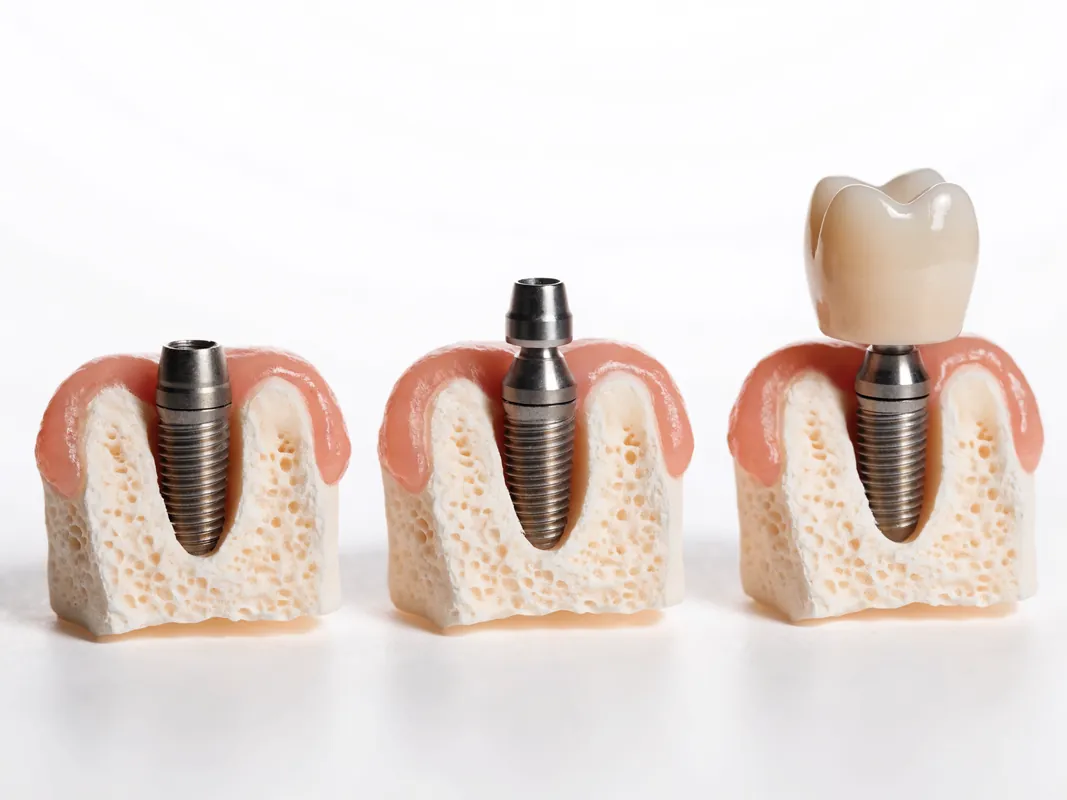
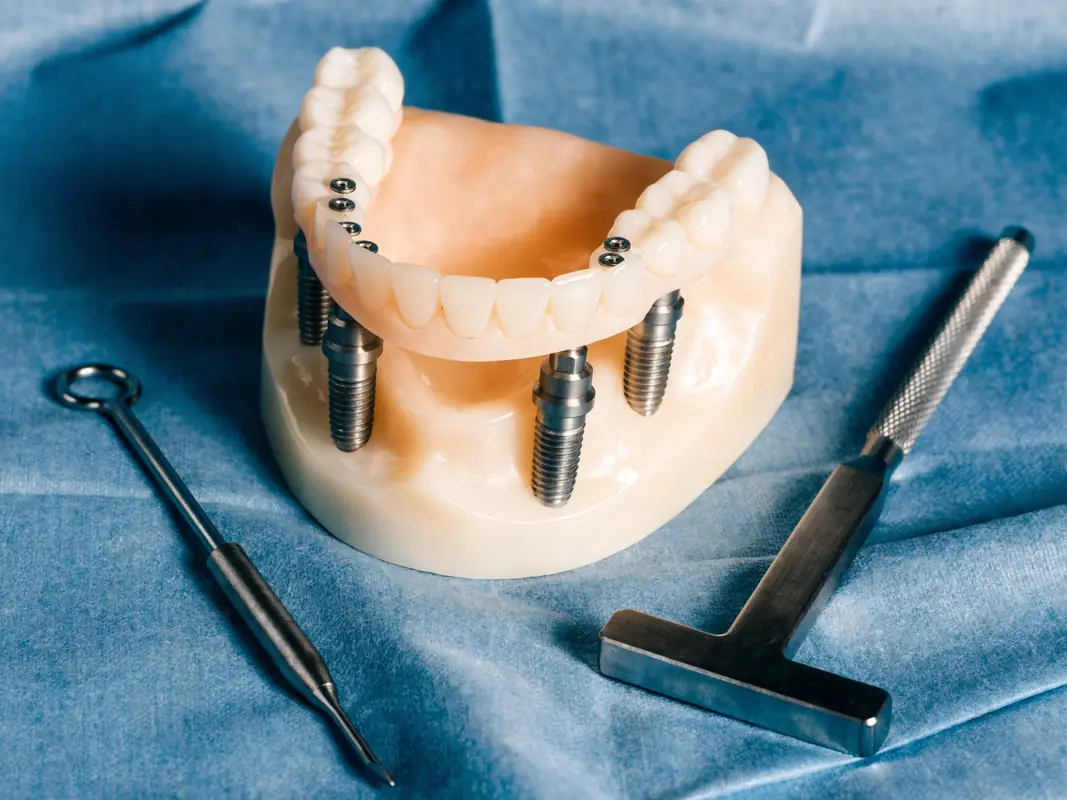
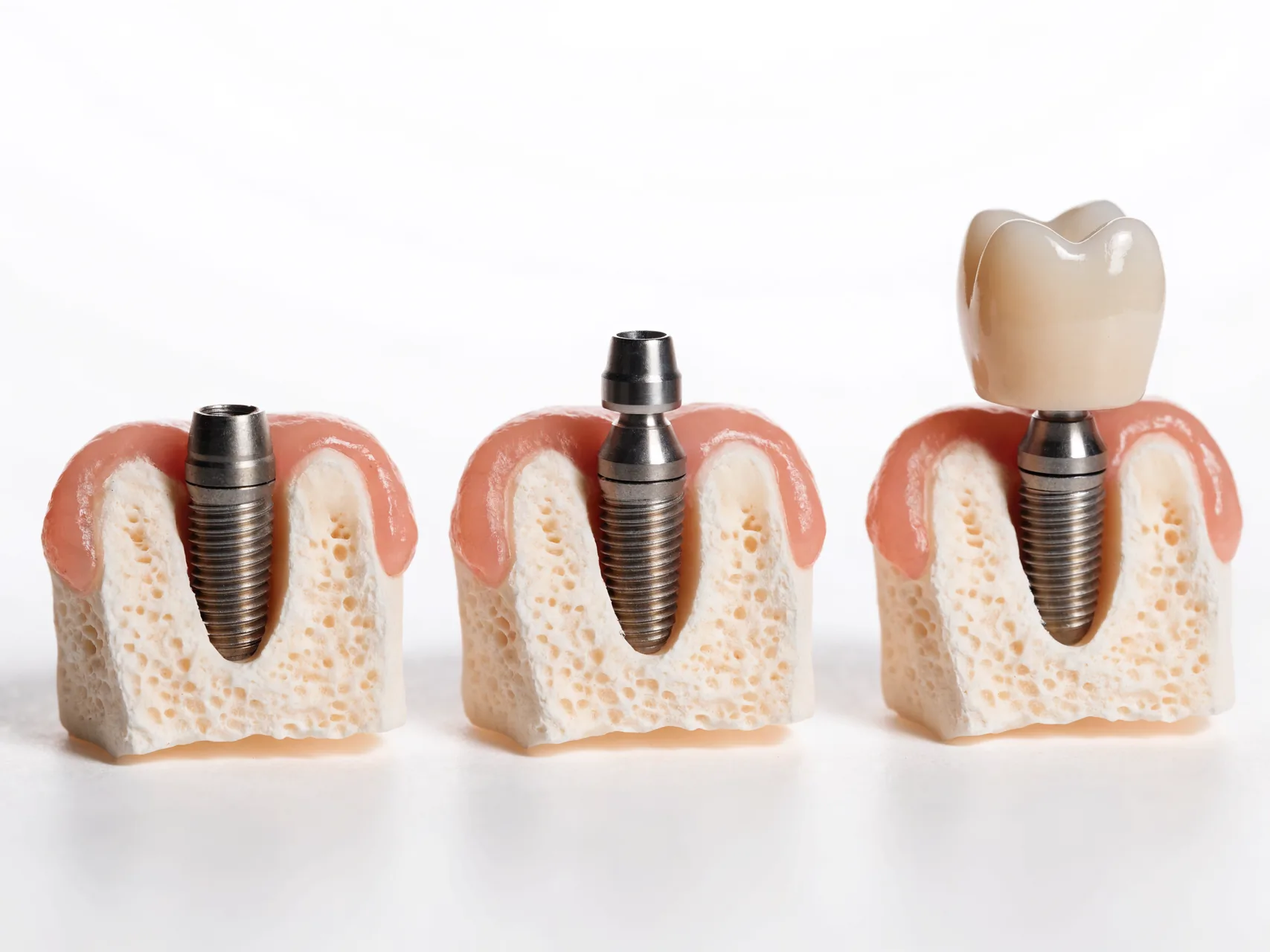
An implant plan may involve more than the fixture. It can include a cover screw or healing component, abutment, crown or bridge framework, veneering material, temporary restoration, cement, impression or scanning materials, graft and membrane. Ask for the planned product categories and whether any substitution is possible after treatment starts.
The words titanium, zirconia, ceramic, collagen or synthetic do not answer every composition question. Ask the manufacturer for documented composition and product information when ingredients or processing aids are clinically relevant. The clinic should be able to identify the implant system and trace graft or membrane products used. A verbal claim about “modern materials” is not equivalent to documentation.
Gluten exposure, metal hypersensitivity, animal origin, human donor origin and ethical preference are different issues. Some grafts or membranes may be animal-derived, human-derived or synthetic. That distinction may matter to allergy history, beliefs and consent even when it is not a coeliac mechanism. The named clinician should discuss the actual product, alternatives, limitations and uncertainties without promising that a category is universally suitable.
Ask what information will appear in the treatment record and implant passport: manufacturer, system, dimensions, component references, lot details where applicable, graft or membrane identity and the definitive restoration. This supports later maintenance and repair. It is also useful if a product question arises after returning home.
Clinical examination and imaging limits
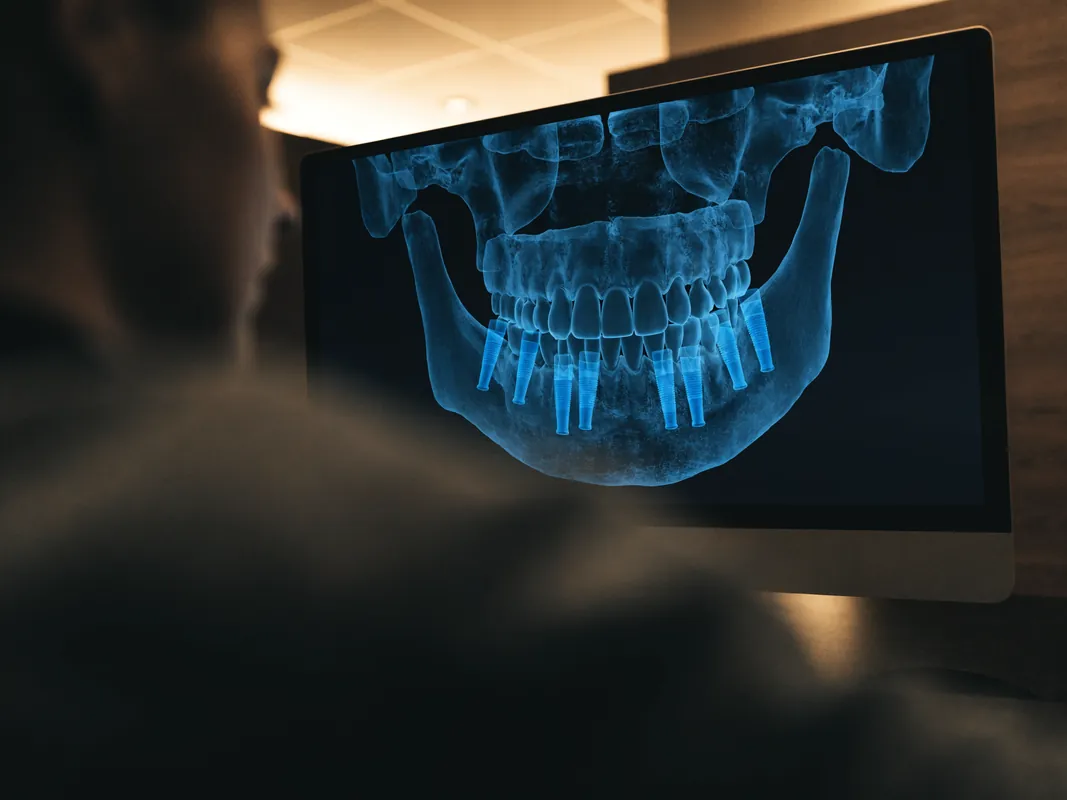
A remote enquiry can organise records, but it cannot determine implant suitability. The treating clinician needs to examine the missing-tooth site and the rest of the mouth, review the medical history, assess gums and remaining teeth, consider bite and function, and decide what imaging is justified. A scan should answer a clinical question, not be used as a sales image.
The assessment should explain whether a tooth can be preserved, whether infection or periodontal disease requires care, and whether the proposed restoration can be cleaned. If extraction, grafting or multiple implants are suggested, ask why each step is necessary and what lower-burden option was considered. If the plan changes after examination, updated consent is needed before proceeding.
CBCT can show three-dimensional dental anatomy, but it does not determine whether coeliac disease is medically stable, whether dietary treatment is effective or whether a deficiency has been corrected. Laboratory records and specialist letters cannot show plaque control or restorative space. A defensible plan combines the right evidence for each question.
Remote certainty is a warning sign. Statements such as “approved from your scan”, “guaranteed candidate” or “special protocol solves the risk” go beyond what the supplied records can establish. Ask for a provisional range of possibilities before travel and a final diagnosis and plan after an in-person assessment.
Pre-operative liaison and shared decisions
Liaison should be purposeful. With the patient's permission, the dental clinician can ask the gastroenterology or coeliac care team, GP, dietitian or another prescriber a focused question. Examples include whether persistent symptoms are under investigation, whether a documented deficiency or bone condition needs further management, and whether a particular medicine creates a perioperative issue.
“Please clear this patient for implants” is too broad. The medical professional may not know the extent of dental surgery, and the dentist remains responsible for deciding whether the oral procedure is justified. The referral should state the proposed intervention and the exact uncertainty. The answer and any remaining uncertainty should be recorded.
If clinical or nutritional concerns are unresolved, elective treatment can be deferred without predicting a future approval date. Ask what concern is being addressed, who owns it, what information would support reassessment and what interim dental option is available. Deferral should protect decision quality, not become leverage for additional services.
Shared decision-making includes the choice not to have an implant. The person should have time to consider the expected benefits, burdens, alternatives, maintenance and uncertainty in a language they understand. A travel deadline or temporary discount should not compress that process.
Tooth preservation before a coeliac-related implant decision
An implant replaces a missing tooth; it is not a reason to remove a tooth that can predictably be maintained. Ask for the diagnosis and restorability assessment for every proposed extraction. Where opinions differ, an independent local assessment may be valuable before irreversible treatment.
Alternatives may include monitoring, periodontal or endodontic treatment, a direct or indirect restoration, an adhesive bridge, a conventional bridge, a removable prosthesis, orthodontic space management or accepting the space. Each has different effects on neighbouring teeth, surgery, cleaning, repair and future options. The best comparison is individual rather than a generic ranking.
Someone with recurrent ulcers, dry mouth, manual-dexterity limitations or a complex diet may place particular value on a design that is easy to clean and repair. That may influence whether a fixed, removable or no-treatment option is acceptable. It does not automatically point to more implants.
Ask what happens if site anatomy, periodontal findings or medical input makes the original implant proposal unreasonable. A good consent process preserves a genuine alternative rather than treating travel as consent to whatever is found.
Coeliac-aware consent and named clinical ownership
Valid consent is a continuing conversation, not a signature collected after arrival. The written plan should identify the legal clinic, treating clinician, diagnosis, proposed procedures, material categories, meaningful risks, alternatives, likely burdens, aftercare responsibilities and what remains uncertain. It should distinguish provisional information from the final plan.
GDC standards apply directly to GDC registrants and are used here as a UK patient-facing benchmark, not as a claim that an overseas professional is GDC regulated. Principle 3 requires relevant options and possible costs to be explained, understanding to be checked, and consent to be renewed if treatment changes. The regulator's guidance on treatment abroad also advises checking qualifications, regulation, full medical assessment, aftercare, complaint routes and responsibility if further treatment is needed.
WeCare cannot diagnose, consent, prescribe or accept clinical responsibility on behalf of a clinic. A coordinator can transmit records and questions with permission, but the named clinician must answer clinical questions directly. Ask where the contemporaneous clinical record will be held and how a copy can be obtained.
Consent should include uncertainty about coeliac-specific implant evidence. It should not imply that following a gluten-free diet guarantees integration or that an abnormal historical result predicts failure. The person needs an honest explanation of what is known about their mouth and health, what is inferred and what cannot be promised.

Healing, maintenance and local follow-up
Healing instructions should be based on the procedure and the individual's health, not a fixed coeliac timetable. Ask what findings will be reviewed before a restoration is loaded or treatment moves to another stage. Calendar time by itself does not demonstrate integration, absence of infection or readiness for the next step.
The immediate plan should cover cleaning, eating within the established gluten-free diet, use of prescribed products, how to report symptoms and who can examine a concern. Messaging and photographs can support communication but cannot rule out infection, altered sensation, wound breakdown or another complication that needs direct assessment.
Long-term maintenance matters regardless of coeliac status. The European Federation of Periodontology's 2023 S3 guideline supports risk assessment, stable periodontal health, restoration designs that permit hygiene, monitoring and individually tailored supportive peri-implant care. It does not create one recall interval for every person.
Before treatment, identify a local dentist willing and able to provide local maintenance after return. Confirm what baseline charting and radiographs will be supplied, which components were used, how the restoration can be removed if necessary, and who pays or decides when care is needed across jurisdictions. The implant aftercare guide provides a broader handover framework; personal instructions from the responsible clinicians take priority.
Travel and the no-travel option
Travel adds food, medicine, timing and continuity questions to the clinical decision. Plan reliable access to gluten-free meals and avoid assuming that a “gluten-free” hotel or restaurant claim has been clinically verified. Keep medicines in their labelled packaging and carry the information needed to check formulations or obtain help.
Ask how long the treating clinician expects you to remain nearby based on the actual procedure and what clinical findings must be satisfactory before departure. Avoid a fixed website schedule. Flight timing, anaesthesia or sedation, swelling, bleeding risk, existing conditions and the possibility of an unplanned review all require individual advice.
Arrange a written handover before leaving: diagnosis, procedures, dates, implant and component identity, graft or membrane details, prescriptions, images, clinical findings, maintenance needs and urgent contact routes. Confirm whether the destination clinic will speak directly with a local dentist if needed.
The no-travel option should remain visible. Local assessment or treatment may reduce handover gaps and make review easier, especially when symptoms, nutrition, medical liaison or the treatment plan remains unsettled. Choosing local care, delaying treatment or declining an implant is not a failed booking.
Urgent signs and emergency boundary
Elective implant research should pause when urgent assessment is needed. Worsening facial or oral swelling, fever with dental symptoms, increasing pain, pus, persistent bleeding, wound breakdown, new or worsening altered sensation, inability to eat or drink, or a restoration that becomes mobile requires prompt advice from an appropriate clinician. Do not wait for a travel message if local examination is needed.
Heavy bleeding that will not stop, severe swelling affecting breathing or the throat, serious facial injury, loss of consciousness or another life-threatening symptom requires emergency care. In England, NHS guidance directs people to emergency services for severe swelling affecting breathing and uncontrolled heavy bleeding, and to NHS 111 or an urgent dentist for urgent dental problems. Use the emergency system where you are.
Persistent diarrhoea, unexplained weight loss, severe fatigue, recurrent vomiting or other concerning systemic symptoms are not dental clearance questions. Contact the usual medical or gastroenterology team. A dentist should not attribute them to dietary exposure without assessment.
Questions for a coeliac-aware implant assessment
- Who is the named treating dentist or surgeon, and which legal clinic holds responsibility?
- Is my coeliac diagnosis confirmed, suspected or self-reported in the clinical record?
- Which current symptoms, deficiencies, bone findings, medicines or comorbidities could change this plan?
- Is a medical or dietetic opinion needed, and what exact question will be asked?
- What oral disease must be stabilised before implant placement?
- Can each proposed extraction be avoided, and what non-implant options were compared?
- What examination and imaging findings support the number and position of implants?
- Which oral products and prescribed formulations will be checked for my gluten concern?
- Which implant, graft, membrane and restorative products are proposed, and what documentation is available?
- How will the restoration permit cleaning, examination, repair and component access?
- What findings, rather than a calendar promise, determine progression between treatment stages?
- Who provides urgent care at the destination and after I return home?
- Which local dentist can provide maintenance, and what records will that dentist receive?
- What happens if the in-person findings change the provisional proposal?
- What are the complaint, record-access and cross-border aftercare routes?
- What is the reasonable no-treatment or no-travel alternative?
Coeliac implant-planning checklist
Diagnosis and current care
- Record the diagnosis wording, diagnosing service, date and current gastroenterology or coeliac care team.
- Note current symptoms, recent reviews, unresolved investigations and relevant medical advice.
- Do not use antibody serology as the only measure of dietary exclusion or mucosal recovery.
Nutrition and bone
- Share existing, relevant laboratory and bone-health records with clinical interpretation where possible.
- Ask the usual care team, not a booking page, whether further nutritional or bone assessment is indicated.
- Record diagnosed deficiencies, fractures, osteoporosis and related medicines without assuming them.
Dental assessment
- Obtain an in-person examination of teeth, gums, mucosa, bite and proposed sites.
- Ask why each extraction, image, graft and implant is necessary.
- Stabilise active oral disease and compare tooth-preserving and non-implant alternatives.
Products and medicines
- Provide the exact current medicine and supplement list, allergies and adverse reactions.
- Ask a pharmacist or prescriber to verify an exact formulation when an excipient concern exists.
- Request documented product identity and composition information for relevant oral and implanted materials.
- Never change prescribed care because of a generic webpage or travel date.
Consent, travel and aftercare
- Verify the named clinic, clinician, regulation, records, consent and complaint route.
- Arrange appropriate gluten-free food without treating an accommodation claim as medical certification.
- Obtain a component record, clinical handover, urgent contacts and a local maintenance plan.
- Keep local care, deferral and no treatment as real choices.
Coeliac, oral-health and implant sources
- [NICE NG20: Coeliac disease — recognition, assessment and management](https://www.nice.org.uk/guidance/ng20/chapter/Recommendations), published 2 September 2015 and accessed 29 August 2026. It supports specialist diagnosis, annual review, individual assessment of dietetic, laboratory and bone-health needs, and the statement that serology should not be used by itself to determine gluten exclusion.
- [2026 British Society of Gastroenterology guideline on adult coeliac disease](https://www.bsg.org.uk/clinical-resource/bsg-guidelines-adult-coeliac-disease), Penny and colleagues, published online 12 July 2026 and accessed 29 August 2026. The current multidisciplinary guideline uses GRADE and supports tailored follow-up rather than a dental pass-or-fail rule.
- [NHS coeliac disease treatment](https://www.nhs.uk/conditions/coeliac-disease/treatment/) and [NHS coeliac disease complications](https://www.nhs.uk/conditions/coeliac-disease/complications/), pages last reviewed 31 March 2023 and accessed 29 August 2026. They support the gluten-free diet, dietetic input, clinician-led supplementation when needed, and cautious discussion of malabsorption, anaemia and osteoporosis.
- [Coeliac UK medication guidance](https://www.coeliac.org.uk/living-with-coeliac-disease/health-and-wellbeing/care-after-diagnosis/medication/) and [Coeliac UK information for professionals on ongoing symptoms and complications](https://www.coeliac.org.uk/healthcare-professionals/ongoing-symptoms-and-complications/), accessed 29 August 2026. These practical sources support exact-formulation checks, pharmacist or GP advice, medicine continuity and individual nutrition and bone review; they do not determine implant candidacy.
- Lucchese and colleagues, [systematic review of celiac disease and oral manifestations](https://pubmed.ncbi.nlm.nih.gov/37373569/), Journal of Clinical Medicine, published 6 June 2023 and accessed 29 August 2026. It catalogues reported oral findings while noting the need for better-quality studies.
- Stødle and colleagues, [undiagnosed coeliac disease and periodontal bone loss in the HUNT study](https://pubmed.ncbi.nlm.nih.gov/39257416/), published 2024 and accessed 29 August 2026. This cross-sectional radiographic study did not support a simple assumption of greater severe periodontal bone loss and cautioned against extrapolation to clinical periodontitis.
- [American Dental Association resource on celiac disease](https://www.ada.org/resources/ada-library/oral-health-topics/celiac-disease), accessed 29 August 2026. It is used for the oral-product and dental-manifestation boundary, not for an implant outcome prediction.
- [European Medicines Agency guidance on wheat starch containing gluten as a medicinal excipient](https://www.ema.europa.eu/en/wheat-starch-containing-gluten-scientific-guideline), first published 9 October 2017, updated 19 November 2018 and accessed 29 August 2026, together with the [MHRA medicine product-information service](https://www.gov.uk/guidance/find-product-information-about-medicines), updated 10 July 2026. These support checking the exact formulation and patient leaflet.
- [European Federation of Periodontology S3 guideline on prevention and treatment of peri-implant diseases](https://onlinelibrary.wiley.com/doi/10.1111/jcpe.13823), Herrera and colleagues, 2023. It supports pre-treatment risk assessment, periodontal stability, maintainable restoration design, monitoring and needs-based supportive care.
- [GDC Principle 3 on valid consent](https://standards.gdc-uk.org/pages/principle3/principle3) and [GDC guidance on going abroad for dental treatment](https://www.gdc-uk.org/standards-guidance/information-for-patients-public/going-abroad-for-dental-treatment), accessed 29 August 2026. They are cited as UK patient-facing standards for provider checks, options, written plans, aftercare and changing consent, not as evidence of an overseas provider's regulation.
- [NHS urgent and emergency dental guidance](https://www.nhs.uk/nhs-services/dentists/how-to-find-an-nhs-dentist-in-an-emergency/), accessed 29 August 2026. It supports the urgent and emergency boundaries for people in England.