A search for Hollywood Smile cost in Turkey often begins with a request for one total. The problem is that Hollywood Smile does not define a clinical product. It can be used to describe whitening, selective bonding, veneers, crowns, orthodontic movement, gum care, replacement of missing teeth or a mixture of several categories. It can refer to one visible area or a broader restorative plan. The same phrase can therefore sit above plans with different biological cost, laboratory work, maintenance and financial exposure.
This page does not publish a live total or a unit price. A figure without a named legal treatment provider, responsible clinician, personal tooth map, appropriate assessment and dated itemised quotation could describe the wrong scope and become stale. The useful answer to the cost query is a method for deciding what belongs in the whole-smile plan and comparing complete written proposals on the same basis.
The page deliberately keeps neighbouring search intents separate. Detailed veneer material, preparation and per-tooth quote mechanics belong to the related veneers cost guide. The debate about veneers, crowns and aggressive preparation belongs to the Turkey Teeth guide. Implant pricing belongs to its own guide. Here the focus is the whole-smile map: which teeth and arches are proposed, why they are included, how different treatment categories work together and which costs remain outside the total.
Hollywood Smile describes an objective, not a treatment
Before discussing cost, ask the provider to translate the phrase Hollywood Smile into individual objectives. A person may want to address colour, shape, wear, alignment, gaps, old restorations, missing teeth, gum display or a combination. Those concerns do not automatically require the same treatment. The written plan should connect each concern to a finding and a proposed response.
The plan should also record what the patient does not want changed. A natural variation, a familiar tooth shape or a preference for minimal intervention may matter as much as the desired improvement. A design brief that records preferences can help prevent a generic template from becoming the default.
Use an opening scope statement:
| Scope question | What the written answer should show |
|---|---|
| What concerns are being addressed? | Patient priorities in plain language |
| Which teeth are visible and relevant? | Marked photographs and a tooth map |
| Which arch or arches are being assessed? | Separate upper and lower scope |
| What is proposed for each tooth? | Monitor, whiten, move, bond, veneer, crown, replace or another documented option |
| Why is each unit included? | Tooth-specific finding and reason |
| What remains provisional? | Missing records, diagnosis, design, material, laboratory or sequence decisions |
| What is outside scope? | Clinical, laboratory, maintenance, travel and contingency exclusions |
| Who is responsible? | Named legal treatment provider and responsible clinician |
If the objective and scope cannot be written clearly, the total cannot be compared responsibly.
Build the unit count from evidence, not a package menu
There is no universal Hollywood Smile unit count. A defensible count begins with records of the person at rest, speaking, smiling naturally and smiling broadly. The provider can mark the teeth that are visible in each record and explain why a proposed tooth is included. Visibility alone does not decide treatment, but it helps expose units added only because a package menu uses a round number.
Ask for a tooth map that includes every proposed unit and every visible tooth left untreated. A plan should explain how the treated and untreated teeth will relate in colour, shape, position and bite. The lower arch needs a separate decision rather than being added automatically. A tooth outside the visible area may still require care for a clinical reason, but that reason should appear in the plan instead of being disguised as cosmetic scope.
The count should remain provisional until the responsible clinician reviews the necessary findings. A photograph does not reveal disease, structural support, a crack, the condition beneath an old restoration or every bite concern. It is a visibility record, not a diagnosis.
When comparing quotations, do not ask which package contains more units. Ask which document explains every unit. A smaller plan may be appropriate when it meets the stated objectives and preserves more suitable tooth structure. A broader plan may be appropriate only when its additional scope has a documented reason. Neither conclusion can be derived from a standard number.
Diagnose before designing the smile
Cosmetic design should not conceal untreated disease or structural uncertainty. The responsible clinician determines which examination, images, photographs, scans, models and history are appropriate. The written plan should identify what was reviewed, who reviewed it and which information remains unavailable.
Relevant assessment may include gum health, decay, cracks, existing restorations, root-treated teeth, tooth support, wear, tooth position, the relationship between the arches, bite, missing teeth, sensitivity and the patient's ability to maintain the proposed work. Medical and dental history may affect suitability or sequence. This is not a remote checklist that diagnoses a person; it is a prompt for the boundaries a quotation should disclose.
Ask these questions:
- Was the proposal prepared from submitted records only or after direct examination?
- Which findings support the proposed scope?
- Which teeth need further investigation?
- Is active disease managed before elective cosmetic care?
- Which design or treatment decisions remain provisional?
- What finding could change the tooth map, treatment category or total?
- Who authorises a change and how is the patient informed?
- Will the patient receive copies of the relevant records?
An early estimate should say that it is an estimate. A clinician-reviewed provisional plan should list its assumptions. A definitive quotation should incorporate the information available before an irreversible step and record any approved changes.
Preserve suitable teeth and consider alternatives
A whole-smile plan can affect several healthy or maintainable teeth. Each irreversible proposal therefore needs a tooth-specific justification. The responsible clinician should explain whether the objective could be achieved with less intervention, a different sequence or no treatment.
Reasonable alternatives may include monitoring, professional cleaning, whitening, selective bonding, orthodontic movement, repair of existing restorations, targeted gum care, replacement of only failed work or a mixed plan. Missing-tooth replacement is a separate decision that should not be bundled into cosmetic units without its own assessment and alternatives.
Different teeth may need different treatment categories. One tooth might be monitored, another bonded, another already require a crown for a structural reason and another be left unchanged. Mixed treatment is not a compromise. It is often evidence that the plan was built tooth by tooth rather than copied from a package.
The quotation should not describe crowns and veneers as interchangeable units. Their preparation and indications differ. For per-tooth veneer material and preparation questions, use the veneers cost guide. For a deeper explanation of the preparation controversy and how to question a crown proposal, use the Turkey Teeth guide. This page records the mixed scope and the reason for each category without duplicating those specialist intents.
Design records should support consent, not promise an outcome
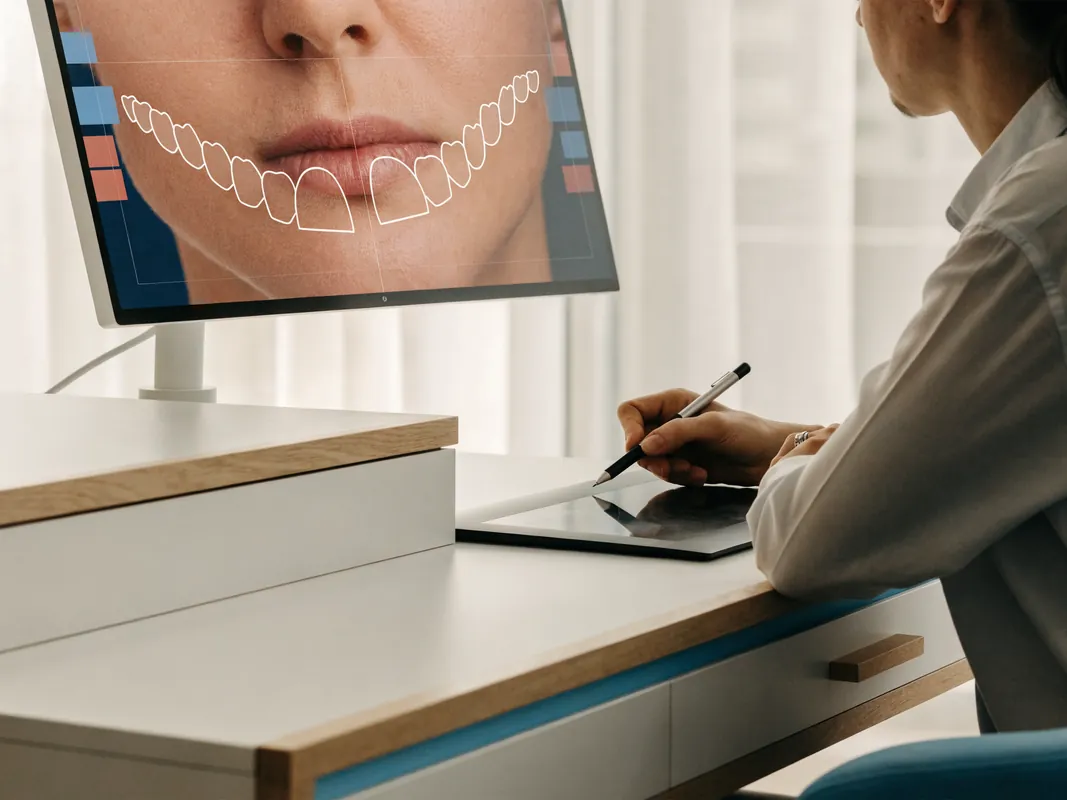
A digital design, wax-up, mock-up, provisional restoration and definitive restoration are different records or stages. The quotation should name which ones are proposed and what each is intended to test. A digital image can support discussion of proportion and direction, but it does not establish fit, shade, speech, tissue response, bite or the final appearance.
A mock-up may help the patient discuss length, apparent width, bulk, speech and overall character before irreversible preparation where appropriate. It should be labelled as a planning aid with technical and clinical limits. It is not a guaranteed preview.
Consent should identify which changes are reversible and which are not. Removed tooth tissue does not grow back. The patient should understand the treatment category proposed for each tooth, relevant alternatives, important case-specific risks, provisional and definitive stages, maintenance responsibilities and what happens if the plan changes or the patient chooses not to continue.
Approval should be recorded in a durable form, not inferred from attendance or a deposit. Travel arrangements and laboratory schedules should not compress the opportunity to ask questions or obtain a second opinion.
Separate design scope from per-tooth material mechanics
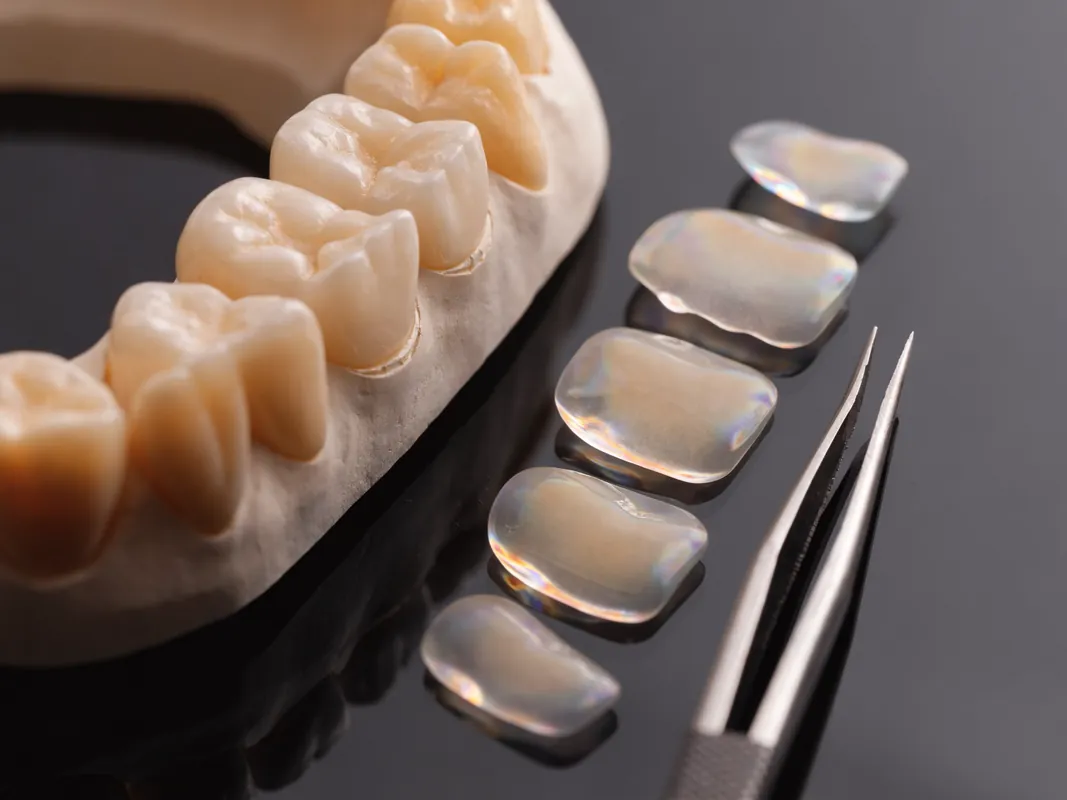
The whole-smile quotation should identify the material category and restoration type proposed for each tooth, but this page does not rank materials or publish per-unit material prices. A material name alone does not prove suitability, appearance, durability or workmanship.
Ask the quotation to show which teeth share a material or laboratory prescription and where the plan intentionally differs. It should identify the responsible laboratory or fabricating party when known, the stage at which the prescription becomes definitive, and which records will be supplied. If a quoted material later changes, the written plan and price should change with it.
The veneer cost guide owns the detailed comparison of direct and indirect materials, preparation boundaries and per-tooth quotation anatomy. Keeping that detail on one page prevents the Hollywood Smile guide from becoming a duplicate veneer price page. Here, material belongs only as one field in the broader tooth map.
Map the plan as mixed treatment scope
Create a row for every proposed tooth and a separate row for any non-tooth-specific stage. The resulting schedule should allow a reader to understand the whole plan without relying on a package name.
| Scope category | What the quotation should identify |
|---|---|
| Disease control | Finding, responsible provider, sequence and whether it sits outside the cosmetic total |
| Tooth alignment | Teeth involved, assessment status, relationship to later restorative work and alternatives |
| Colour management | Teeth or arches involved and how existing restorations affect the plan |
| Direct restoration | Identified tooth, purpose, material category and review route |
| Veneer | Identified tooth, reason, preparation boundary and link to the detailed per-tooth plan |
| Crown or other indirect restoration | Identified tooth, structural reason, material category and records |
| Missing-tooth care | Separate assessment, alternatives, provider responsibility and quotation |
| Gum care | Clinical reason, responsible provider and effect on the design sequence |
| Diagnostic design | Records used, approval stage and limitations |
| Provisional stage | Purpose, scope, limitations, adjustments and responsibility |
| Definitive stage | Tooth map, prescription, laboratory, approval and fitting process |
| Maintenance and aftercare | Instructions, review route, records and urgent assessment boundary |
This schedule makes overlap visible. It helps prevent the same stage being charged once as a package inclusion and again as an external item. It also reveals when a cosmetic total depends on clinical work that has not yet been assessed or quoted.
Provisional and definitive stages need separate lines
An initial design may change after examination, preparation, provisional review or laboratory input. The quotation should mirror that sequence. It should distinguish the initial scope estimate, clinician-reviewed provisional plan, pre-treatment confirmation, provisional stage, definitive prescription, fitting and final record set.
When provisional restorations are proposed, ask what they cover, who supplies them, what they are intended to test, which limitations apply, how adjustments are handled and what happens if a provisional cannot be used as expected. Do not assume that provisional care is included because definitive units appear in the total.
Before definitive fitting, the patient should know which design decisions can still be reviewed and which changes would require a new laboratory stage or extra charge. Shade, form, contact, speech and bite discussions should be documented without presenting approval as a guarantee of a result or service life.
Every plan version should carry a date. Any material change should identify the new finding, reason, alternatives, items added or removed, price effect and patient decision before the next irreversible step.

Itemise the whole-smile quotation
A useful quotation separates clinical, laboratory, commercial and travel categories. Mark each row included, excluded, conditional or not applicable.
| Quote section | What should be visible |
|---|---|
| Assessment | Named provider and clinician, records reviewed and missing information |
| Tooth map | Every proposed tooth, treatment category and reason |
| Alternatives | Less invasive, staged and no-treatment options considered |
| Disease control | Care required before cosmetic stages and separate responsibility |
| Design records | Photographs, scans, design, wax-up or mock-up where proposed |
| Tooth-specific care | Restoration type and per-tooth plan reference |
| Provisional care | Scope, purpose, adjustments and exclusions |
| Laboratory work | Responsible party, prescription, revisions and records |
| Definitive care | Fitting, review and approval process |
| Conditional care | Trigger, evidence, decision-maker and price effect |
| Records | Clinical, laboratory, traceability and payment documents supplied |
| Maintenance | Cleaning, review, repair assessment and patient responsibilities |
| Aftercare | Routine and urgent contact route with named responsibility |
| Travel | Separately contracted services and exclusions, if any |
| Payment | Currency, recipient, stages, cancellation and change control |
A package name is not an inclusion list. If the provider uses a package label, the itemised schedule should control whenever the headline and the detailed terms differ.
Exclusions and conditional costs
Not every person needs every item below. The risk is leaving it unlabelled:
- examination, diagnostic images or repeat records;
- treatment of active gum disease, decay, cracks or infection;
- removal, repair or replacement of existing restorations;
- orthodontic assessment or movement;
- whitening or other colour management outside the restored teeth;
- treatment of neighbouring or opposing teeth;
- gum or other external-provider care where proposed;
- missing-tooth assessment and treatment;
- provisional restorations and authorised repairs;
- laboratory design changes or remakes before fitting;
- prescribed medicines or other case-specific care;
- fitting adjustments and post-fitting review;
- professional maintenance, repairs or later replacement;
- urgent assessment after returning home;
- copies or transfer of records;
- taxes, finance, card or conversion charges;
- flights, accommodation, local transport, companion costs and time away.
For every conditional item, ask for the trigger, evidence, decision-maker, alternative, price effect and approval process. An open-ended clause should not permit any addition without an updated plan and informed agreement.
Use a whole-smile quote comparison worksheet
Create one column per provider and enter only what the dated documents establish.
| Comparison field | Provider A | Provider B | Provider C |
|---|---|---|---|
| Legal treatment provider named | |||
| Responsible clinician named | |||
| Assessment status stated | |||
| Patient objectives recorded | |||
| Marked visibility photographs | |||
| Upper and lower scope separated | |||
| Every proposed tooth identified | |||
| Reason recorded for every unit | |||
| Mixed treatment categories itemised | |||
| Alternatives and no treatment discussed | |||
| Tooth-preservation boundary recorded | |||
| Design and mock-up stages identified | |||
| Provisional and definitive stages separated | |||
| Laboratory responsibility identified | |||
| Exclusions and change triggers listed | |||
| Records and traceability supplied | |||
| Maintenance and aftercare route written | |||
| Currency, payment and cancellation terms stated | |||
| Travel services separated from clinical care |
Do not score a plan higher merely because it contains more units or hospitality. First compare diagnosis, scope, preservation, consent, records and aftercare. Then compare totals only where the plans describe equivalent care. A blank cell is a question to resolve rather than permission to assume an inclusion.
Currency, payment and change control
The quotation should state one billing currency, the legal entity receiving each payment and the stage linked to that payment. If a converted figure is shown, ask which currency controls the agreement, when conversion occurs and which bank, card, finance or third-party charges remain outside the total.
Ask what a deposit reserves, when cancellation terms apply and what happens if assessment changes the tooth map or treatment category. The treatment provider, laboratory, coordinator and travel supplier may have separate roles and agreements. Payment to one entity should not be treated as proof that another entity accepted clinical responsibility.
When the plan changes, request a new version showing the finding, reason, alternatives, scope difference, price effect and revised schedule. Review it before an irreversible stage. Keep receipts naming the legal recipient and purpose of every payment.
Records, privacy and future serviceability
The patient should know which records will be supplied. Useful documents may include the named provider and clinician, objectives, examination findings, tooth map, plan versions, consent, photographs or scans used for care, design records, restoration and material descriptions, laboratory prescription, traceability information, fitting notes, invoices, aftercare instructions and approved changes.
These records help another qualified provider understand what was planned and supplied. They support routine maintenance, a second opinion, repair assessment, complaint or continuation of care. Informal messages should not be the only evidence of a tooth, material, scope or payment decision.
Ask how facial images, scans and health information are collected, shared with laboratories or other providers, retained and returned. Use a secure record-sharing route identified by the responsible provider. A marketing consent should not be assumed from a clinical record submission.
Future serviceability also belongs in the original comparison. Ask whether another qualified provider can identify the materials and components, which records are required and who assesses a repair or remake. The answer should be a process rather than an unsupported promise.

Aftercare is broader than a warranty
A whole-smile plan may involve different teeth, materials and maintenance needs. The responsible clinician should provide case-specific cleaning, gum care, review and protective instructions based on the final work and individual findings. A generic schedule is not a substitute for personal instructions.
Ask who handles routine questions, what signs require prompt local assessment, how information from another clinician is reviewed, who authorises repair or further care and which clinical, laboratory, travel or external-provider costs remain the patient's responsibility.
If warranty language is offered, review the issuing legal entity, covered event, exclusions, maintenance conditions, evidence, remedy and travel responsibility in a separate written document. It does not guarantee clinical success, appearance, comfort, a fixed service life or reimbursement of every related cost. Aftercare should remain clear even when no warranty remedy applies.
Keep travel separate from clinical quality
International care creates practical costs outside the treatment total. The plan should identify which clinical stages require attendance and which arrangements remain dependent on assessment, consent or laboratory decisions. Avoid making non-refundable arrangements around an unconfirmed clinical schedule.
Flights, accommodation, local transport, companion expenses and time away should be budgeted separately unless a written contract identifies the supplier and exact commercial terms. A hospitality description, hotel category or vehicle image does not establish clinical quality or a personal allocation.
After returning home, urgent symptoms may require assessment by a local qualified provider. Ask how records are shared, who reviews the findings and what happens when further travel is not practical. Do not rely on a vague statement that support is always available.
Red flags in a Hollywood Smile quotation
- Hollywood Smile is presented as a standard clinical product.
- A fixed unit count is recommended without marked visibility records and a tooth map.
- The lower arch is added automatically rather than assessed separately.
- Every proposed tooth receives the same treatment category without a tooth-specific reason.
- A salesperson presents a definitive plan before appropriate clinical assessment.
- The legal treatment provider or responsible clinician is absent from the documents.
- Active disease or structural uncertainty is hidden beneath cosmetic design.
- Treat any claim that a digital rendering or mock-up guarantees the outcome as a red flag.
- Preparation is described only with a marketing term and no personal plan.
- Crowns and veneers are treated as interchangeable package units.
- Less invasive alternatives and no treatment are dismissed without explanation.
- Provisional care, laboratory stages or fitting review are assumed but not itemised.
- Conditional work has no trigger, price effect or approval process.
- A fixed total, timetable, lifespan, comfort level or result is promised before assessment.
- Hotel or transport language is used as evidence of clinical quality.
- Warranty wording hides exclusions or every practical route to a remedy.
- Aftercare is an informal messaging promise without records or named responsibility.
Decision checklist before paying
- The objectives and boundaries of the smile plan are written.
- The named legal treatment provider and responsible clinician are identified.
- The assessment status and missing information are clear.
- Marked photographs support the proposed visible scope.
- Upper and lower arches are considered separately.
- Every proposed tooth and treatment category appears on a tooth map.
- Each unit has a tooth-specific reason.
- Disease control and structural care are sequenced before cosmetic stages.
- Alternatives, mixed treatment and no treatment have been discussed.
- Tooth-preservation and irreversible boundaries are understood.
- Design, mock-up and consent stages are labelled accurately.
- Provisional and definitive stages are separated.
- Inclusions, exclusions and conditional items are itemised.
- Currency, payment, cancellation and change-control terms are written.
- Clinical, design, laboratory and traceability records will be supplied.
- Maintenance, urgent assessment and aftercare responsibilities are clear.
- Travel arrangements are separate from clinical claims.
- No decision depends on a fixed unit count, outcome, timing or longevity promise.
If an answer is missing, ask for a revised document. A responsible plan may take longer to complete because it waits for clinical information. That is preferable to a polished package whose scope cannot be audited.
The responsible answer to a Hollywood Smile cost search
There is no honest universal Hollywood Smile total detached from diagnosis, tooth scope and provider responsibility. The comparable number is the total attached to a dated plan that identifies every proposed tooth, treatment category, clinical and laboratory stage, exclusion, record and aftercare responsibility.
Use the veneers cost guide for per-tooth veneer materials, preparation boundaries and unit quote mechanics. Use the Turkey Teeth guide for the preparation and crown controversy. Use the implant cost guide when missing-tooth replacement is being considered. This page owns the whole-smile scope, unit-count evidence and mixed-treatment quotation, so those neighbouring pages do not need to repeat it.
Compare equivalent written plans, not package names. Preserve suitable teeth, require a reason for every unit, keep design separate from diagnosis and resolve every conditional cost before payment. A useful quotation does not promise a standard smile. It shows what is proposed for this person, why, by whom and how responsibility continues after fitting.