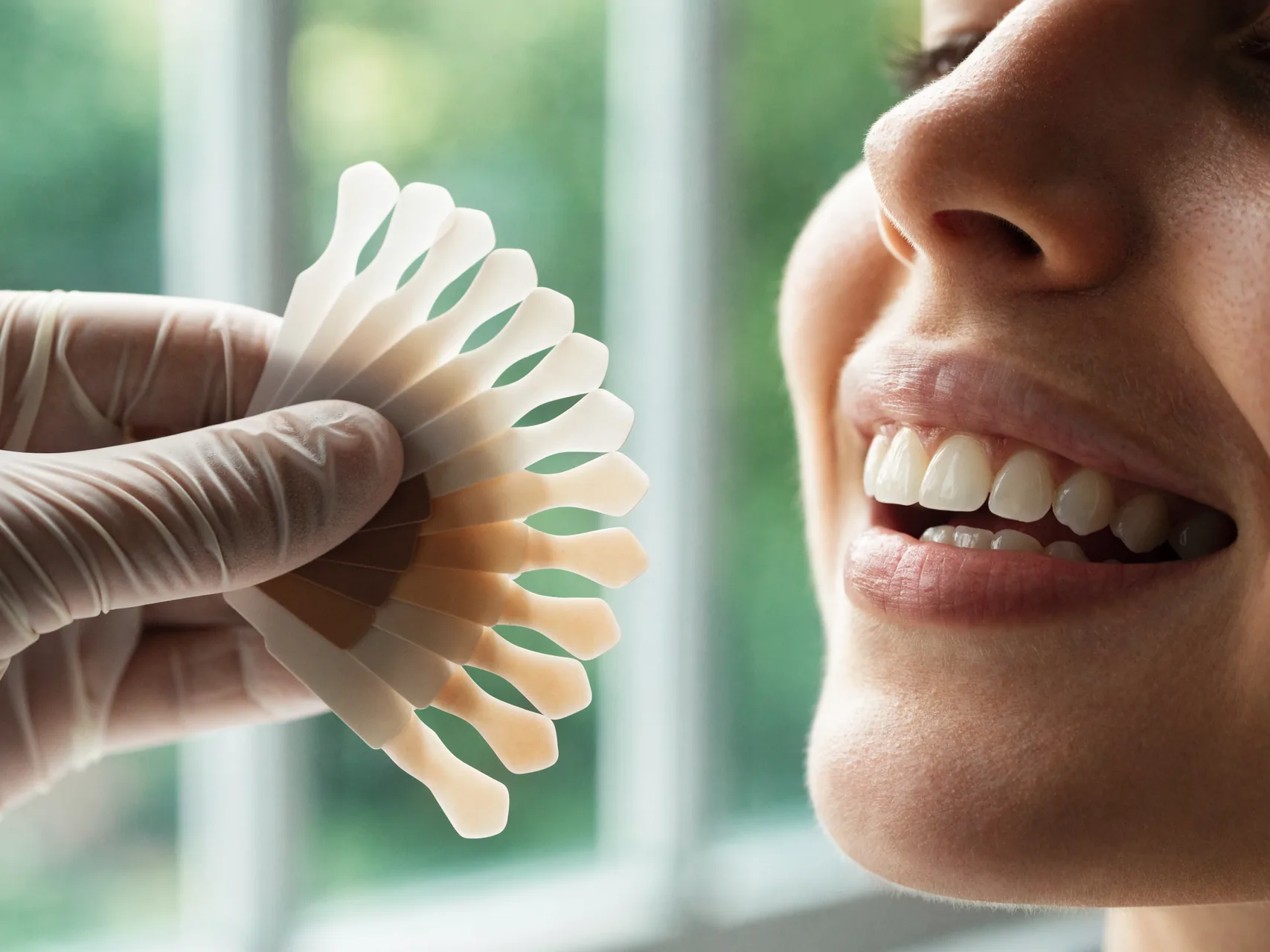
Veneers and teeth whitening are often marketed as a combined smile package. Clinically, they are separate decisions that interact through colour. Peroxide whitening can alter the appearance of natural tooth tissue. A ceramic or composite restoration does not lighten in the same way. If both treatments are reasonable, the sequence, stabilisation period, shade communication and future maintenance need one written plan. If either treatment is unnecessary, combining them only adds risk, cost and irreversible work.
This guide explains how to compare whitening before veneers, whitening after existing veneers, in-clinic and dentist-supervised home delivery, shade matching and restorative alternatives. It does not prescribe a whitening brand, concentration, number of applications, veneer material, amount of tooth reduction, treatment calendar, price, lifespan or final shade. A remote photograph cannot establish oral health, tooth vitality, stain cause, enamel thickness, restorability, bite or the need for veneers.
The [NHS teeth-whitening guide](https://www.nhs.uk/tests-and-treatments/teeth-whitening/) explains that teeth and gums should be checked first and that whitening affects natural teeth rather than crowns, dentures or implants. The [American Dental Association whitening review](https://www.ada.org/resources/ada-library/oral-health-topics/whitening) discusses stain causes, peroxide delivery, restorations and common adverse effects. UK patients should also read the current [General Dental Council tooth-whitening position statement](https://www.gdc-uk.org/docs/default-source/what-is-the-legal-position/tooth-whitening-position-statement.pdf), because lawful supply and first use are professional and jurisdictional questions.
Start with two independent questions
Before asking how to combine treatments, ask:
- Is whitening appropriate for the diagnosed colour concern and current oral health?
- Is a veneer appropriate for each proposed tooth after reasonable alternatives and tissue preservation have been considered?
A yes to one does not create a yes to the other. Natural teeth that are healthy in shape and position may need no treatment or may respond sufficiently to cleaning or supervised whitening. A tooth with a local shape, surface or colour concern may be suitable for additive composite or another conservative option. A tooth may need restorative care for structural reasons without needing a cosmetic veneer. Conversely, whitening cannot repair a fracture, replace missing tissue, close every space or change the colour of an existing crown.
Record a tooth-by-tooth diagnosis. Avoid a plan that starts with a fixed number of veneers and then searches for reasons to prepare that many teeth. The visible smile is not a standard count; lip movement, tooth display, arch form, colour distribution and patient preference vary.
Define what the patient means by colour mismatch
The phrase yellow back teeth can conceal several situations:
- natural premolars or molars are darker than front restorations;
- external stain or calculus makes some surfaces look darker;
- old composite, crowns or implant restorations do not match surrounding teeth;
- a single tooth changed after trauma, root-canal treatment or pulpal disease;
- developmental discolouration, fluorosis or white spots create uneven contrast;
- lighting, dehydration, camera settings or lipstick alter the perceived shade;
- translucent enamel reveals naturally warmer dentine;
- gum recession exposes darker root surfaces;
- the problem is shape, texture or alignment rather than colour alone.
Each needs a different conversation. Professional cleaning may reveal the true baseline. A dark non-vital tooth needs diagnosis. Whitening will not change a crown. Root exposure and sensitivity may limit peroxide use. A photograph can document appearance but cannot determine cause.
Map natural teeth and restorations before bleaching
Create a visible-tooth map before treatment. Mark natural enamel and dentine, composite fillings and bonding, veneers, crowns, bridges, implant crowns, dentures and temporary restorations. Record which items appear in relaxed speech, a normal smile and a broad smile. This prevents the false assumption that every visible tooth can be whitened.
For each restoration, ask:
- is it healthy and maintainable;
- is replacement clinically necessary or only an optional colour choice;
- what tissue would be removed to replace it;
- whether its margin, contour or contact needs separate treatment;
- when shade should be reassessed after whitening;
- who pays if the patient accepts the existing mismatch;
- whether replacement can safely wait until after travel.
Do not replace a sound restoration automatically because the natural teeth became lighter. The patient may prefer to accept a modest mismatch. If replacement is chosen, it is a new consent, cost and maintenance decision.
Diagnose the stain before choosing peroxide
External stain from food, drinks, tobacco or plaque-retentive surfaces may partly respond to cleaning and behaviour change. General intrinsic colour within enamel or dentine may respond to peroxide, but the degree and speed vary. Developmental marks such as some fluorosis patterns and tetracycline-associated discolouration can respond unevenly or require a prolonged supervised approach; they are not proof that whitening is useless or that veneers are mandatory.
A single dark tooth after trauma or root-canal treatment is a separate diagnostic pathway. Internal bleaching may be discussed for a suitable non-vital tooth, while decay, cracks, restoration materials or pulpal disease require their own management. Full-arch whitening can alter surrounding teeth and increase contrast if the principal tooth is not addressed.
The assessment may include history, clinical examination, vitality or sensibility testing, photographs, shade records and imaging for defined questions. It should not order radiation merely as part of a cosmetic sales package.
Disease control comes before elective colour work
Active decay, gum inflammation, leaking restorations, cracks, erosion, exposed dentine, unexplained sensitivity and pulpal symptoms can change or postpone both whitening and veneer planning. Treating colour while disease remains can hide the real priority and increase discomfort or failure risk.
The written plan should identify:
- disease requiring treatment;
- findings that are stable and only monitored;
- elective aesthetic concerns;
- the clinician responsible for each decision;
- which stages are conditional on disease control;
- which proposed work is optional.
Refusing an elective veneer or whitening course must not restrict access to necessary dental care. A promotional deadline is not a clinical reason to proceed before the mouth is ready.
Use a conservative option ladder
For every proposed veneer tooth, compare reasonable options in increasing order of intervention where appropriate:
- no treatment and observation;
- hygiene or stain removal;
- supervised whitening of suitable natural teeth;
- lesion-specific care such as selected microabrasion or resin infiltration;
- orthodontic alignment or space management;
- additive composite reshaping or bonding;
- repair or replacement of a defective existing restoration;
- a partial ceramic restoration or veneer when justified;
- a crown only when the structural and restorative diagnosis supports that greater coverage.
This is not a universal sequence. A fractured or heavily restored tooth may have a different route. The principle is to avoid irreversible preparation merely to solve a colour issue that a less invasive option could address. Ask the clinician to explain why each rejected alternative is unsuitable for that tooth.
Whitening alone may be enough
When the main concern is general colour and natural teeth are healthy, whitening alone may meet the patient's goal. It will not straighten teeth, replace missing structure or alter restoration colour, but those limits do not make veneers necessary. The patient can decide after seeing the stable whitening response whether any residual shape or colour concern justifies further treatment.
A staged decision protects choice. Consent to whitening does not need to include advance consent to veneers. If the patient is satisfied after whitening, the restorative stage can be cancelled. If a provider requires a fixed veneer package before the colour response is known, ask why.
Veneers alone may not solve the whole colour system
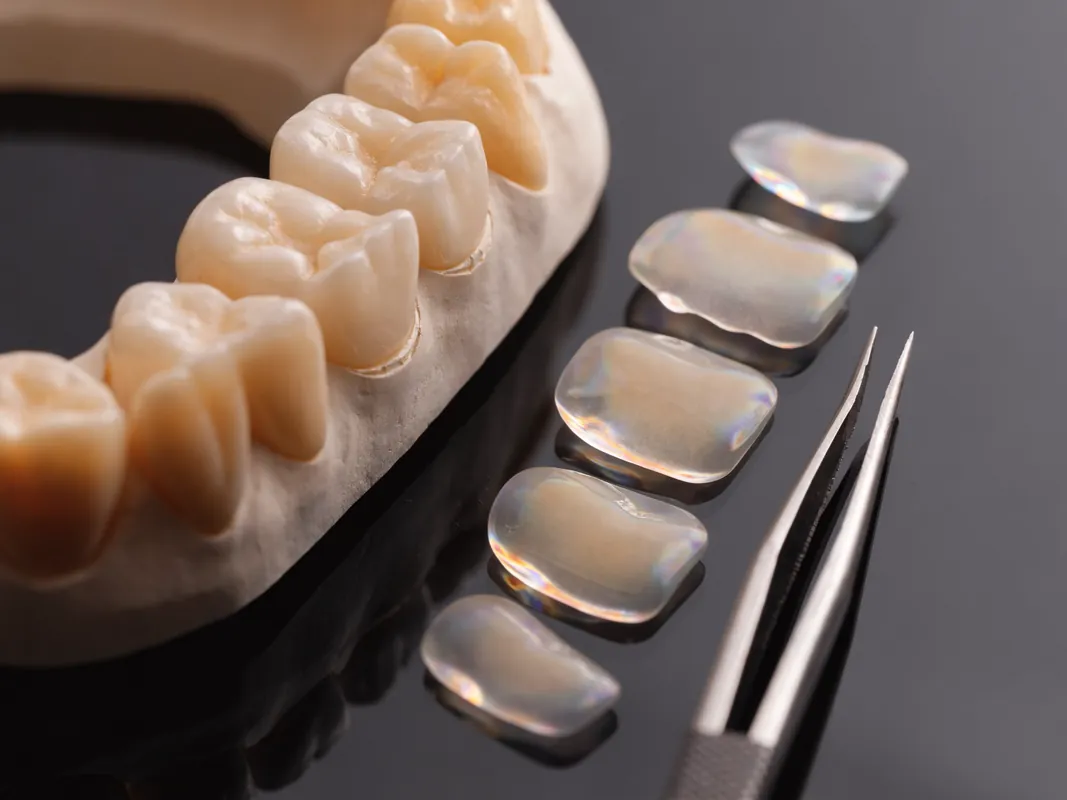
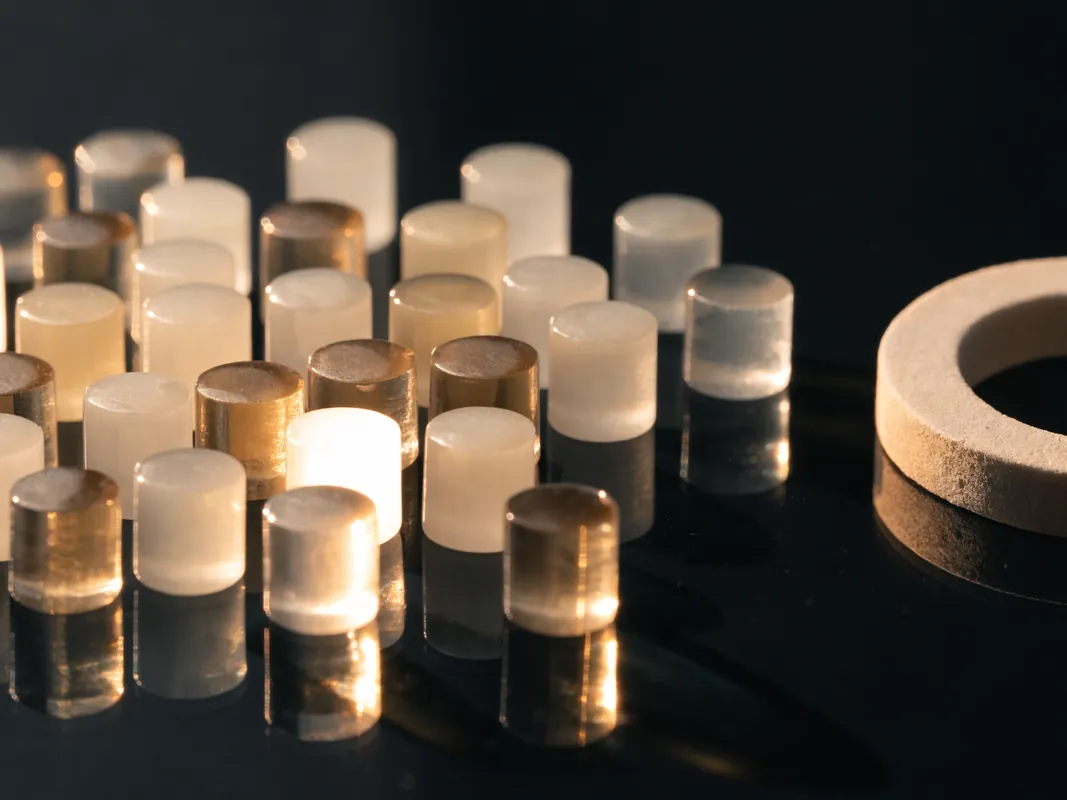
A veneer can change the visible surface of a selected tooth, but the final appearance depends on the underlying tooth, material opacity and translucency, thickness, cement, preparation, neighbouring teeth, gingiva, texture, surface finish and lighting. A thin translucent restoration cannot be assumed to mask every dark substrate. A highly opaque restoration may mask more but create different aesthetic and preparation trade-offs.
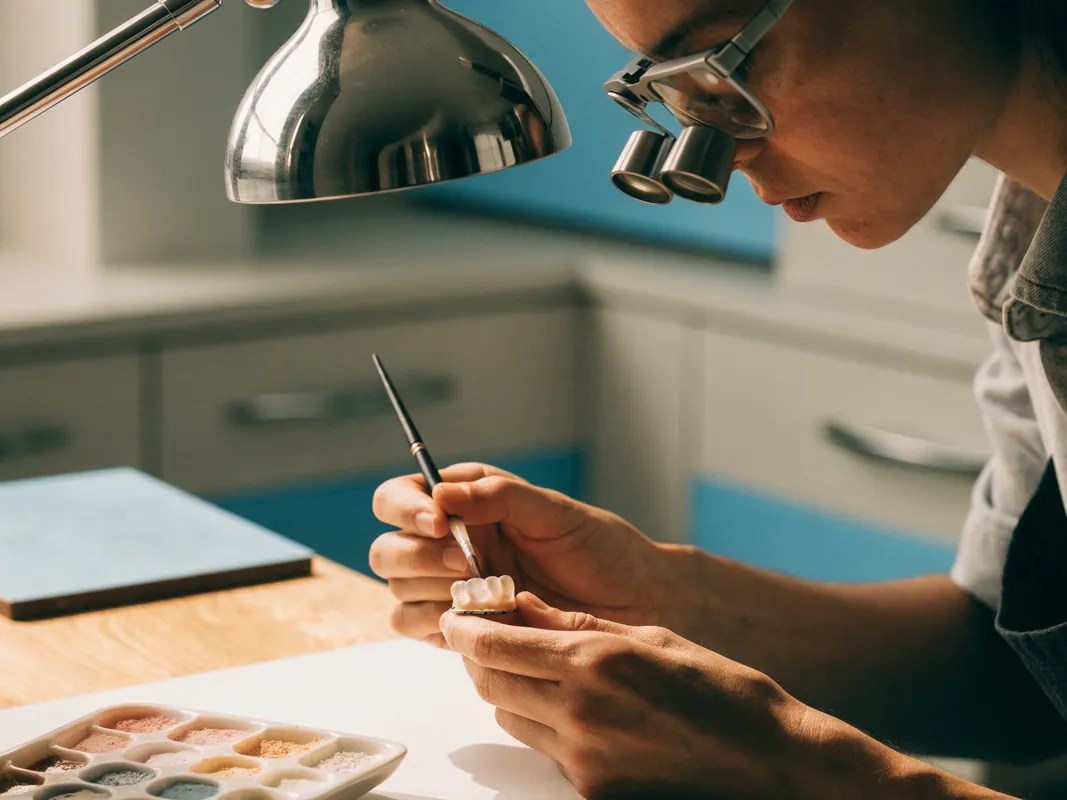
The laboratory needs a substrate or stump shade, target shade, photographs, material and design prescription, surface character, translucency and masking requirements. A generic request for Hollywood white is not a laboratory specification. The clinician should explain what is achievable without over-preparing sound tissue.
Why whitening is often considered first
When suitable natural teeth are to be whitened and new visible restorations are planned, whitening is commonly considered before final shade selection. This allows the patient and team to see the natural-tooth response before manufacturing a restoration that will not bleach later. It can reduce the risk of selecting a veneer shade against a baseline that the patient later changes.
Whitening first is not an automatic same-day formula. Tooth colour can appear temporarily lighter after treatment because of dehydration, and the shade may change as teeth rehydrate. Sensitivity or gum irritation may also need to settle. Bonding procedures can have product-specific timing considerations. The responsible clinician and laboratory should define the stabilisation and bonding plan rather than relying on a universal public interval.
The sequence should be written as clinical gates:
- diagnosis and oral-health acceptance;
- whitening consent and prescribed delivery;
- symptom review and completion or stopping decision;
- colour rehydration and stable shade assessment;
- renewed review of whether veneers remain wanted or needed;
- tooth-by-tooth restorative consent;
- mock-up or provisional evaluation where appropriate;
- preparation only after acceptance of the plan;
- laboratory prescription and try-in;
- bonding and post-treatment records;
- local aftercare and future maintenance.
If a stage does not meet its gate, later irreversible work should not proceed merely to protect a flight or laboratory booking.
Whitening after existing veneers is different
If veneers already exist, whitening natural teeth may make them lighter than, darker than or simply different from the restorations. The veneer shade will not track the change. This does not necessarily damage the veneer, but it can create an aesthetic mismatch.
Before whitening, identify the existing material, margins, bonding, surrounding restorations and natural teeth. Discuss the range of possible mismatch and whether the patient would accept it. Do not promise that future whitening can restore an exact match. If veneer replacement is considered, assess the cost to tooth tissue and the risks of removing the existing restoration.
The in-clinic versus take-home whitening guide compares delivery and records without ranking one method universally. The whitening versus veneers guide helps separate colour treatment from irreversible restoration.
In-clinic and take-home whitening are delivery choices
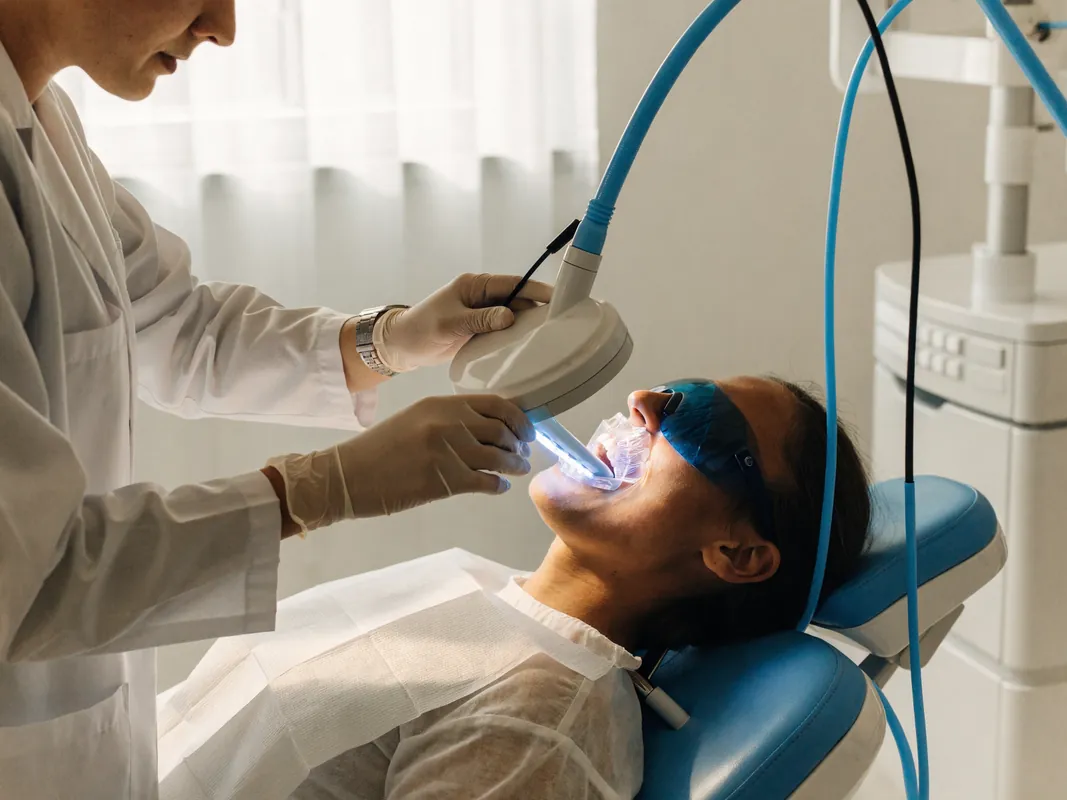
Dentist-led chairside whitening concentrates professional application and observation into a clinical appointment. Dentist-supervised take-home whitening uses prescribed gel and trays across repeated applications with written stop rules and review. Neither route is inherently the correct companion to veneers.
Chairside delivery may suit a patient who values direct control or has difficulty using trays. Take-home delivery may allow gradual adjustment but depends heavily on correct patient use, storage and communication. Sensitivity history, gum health, product, legal supply, deadline, restorations and ability to return for review influence the choice.
Over-the-counter strips, paint-on gels and generic trays lack the same custom assessment and clinical pathway. Do not introduce an unreviewed retail product between veneer planning and bonding; it can change shade, sensitivity or tissue condition without the restorative team knowing what occurred.
A brand name is not a protocol
Searchers often use Zoom whitening as shorthand for in-clinic whitening. A named commercial family may include different products or market versions. A blue light in a photograph does not prove the product identity, concentration, lawful supply, indication or outcome.
If a brand is proposed, request:
- legal manufacturer and exact product or kit;
- active ingredient and concentration;
- expiry, batch or lot information where supplied;
- device identity when a light is used;
- current local instructions;
- clinician and provider legally responsible for application;
- baseline and application record;
- sensitivity and review plan.
Do not infer superiority from brand recognition. Product selection follows diagnosis and local law. This page does not state that any provider stocks or uses a named system.
Shade is more than a letter and number
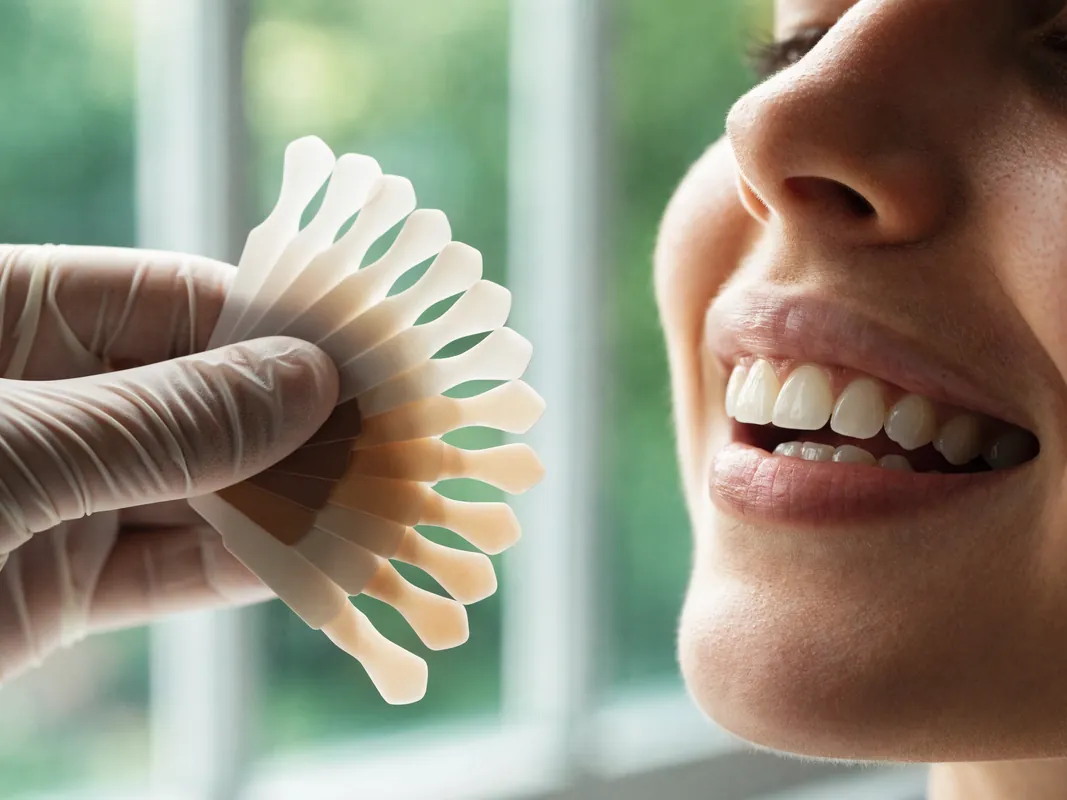
Shade communication can include lightness, chroma, hue, translucency, opacity, fluorescence, surface texture and the colour of underlying tooth tissue. Visual shade tabs and digital devices have strengths and limitations. Lighting, surroundings, hydration and observer variation can change a reading.
Record shade under controlled conditions before and after whitening. Use consistent photographs with a reference where appropriate. The laboratory should receive the natural-tooth target and stump shade rather than a social-media image. Try-in should consider different relevant lighting because materials can appear differently under different spectral conditions, sometimes described as metamerism.
An exact match in every environment cannot be guaranteed. The consent discussion should define an acceptable range, who approves it and what happens if the patient does not accept the try-in.
Brightness should not be the only goal
A very high-value or opaque shade is not automatically more natural, healthy or suitable. The patient's skin, lips, remaining teeth, age, preferences and restoration design influence appearance, but none establishes a single correct colour. Digital simulations and filters can help communication but do not show the optical behaviour of final materials in the mouth.
Ask to compare natural-looking and higher-brightness options without pressure. The patient should understand that maintenance, restoration mismatch and future replacement decisions may change with an extreme shade choice. Consent must remain voluntary even if a package markets one signature shade.
Sensitivity requires diagnosis and stop rules
Temporary sensitivity and gum irritation are recognised whitening adverse effects. Risk varies with baseline sensitivity, exposed dentine, recession, cracks, restorations, product, dose and placement. Veneer preparation and bonding can also create postoperative sensations that must not automatically be blamed on whitening.
The plan should document pre-existing symptoms and identify:
- what discomfort may be expected for the selected product;
- how to pause or stop use;
- which tooth-specific pain needs examination;
- what to do if gel contacts or burns soft tissue;
- who reviews symptoms before veneer preparation;
- whether the veneer plan changes if sensitivity persists.
Do not self-prescribe analgesics, desensitising products or longer gel exposure from an online schedule. Ask the dentist or pharmacist using the patient's medical and medicine context.
Tetracycline and other intrinsic discolouration need a separate strategy
Tetracycline-associated colour varies in severity, banding and distribution. Some cases may respond partially to prolonged supervised whitening; others remain difficult to mask. It is inaccurate to say whitening can never help or that veneers always solve the concern. A thin veneer may show the substrate, while greater opacity or preparation can create other trade-offs.
The tetracycline-stained teeth veneer guide explains diagnosis, conservative options and masking uncertainty. It should not be read as a prescription. The responsible clinician and laboratory must test the actual substrate and planned design.
Mock-up before irreversible preparation
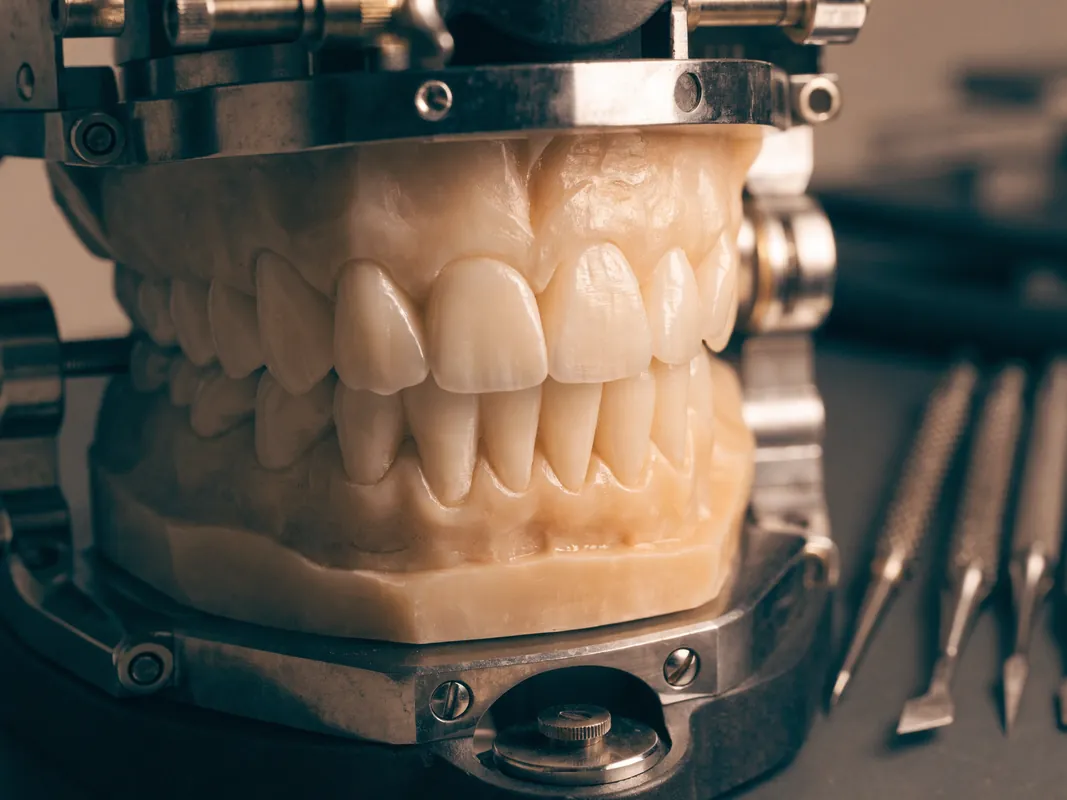
A diagnostic wax-up, digital simulation or intraoral mock-up can help assess proposed length, width, proportion, speech and smile display. It cannot prove the final material, colour or biological response. The patient should understand whether the mock-up is additive and reversible or whether any tooth has already been prepared.
Use the mock-up to ask:
- do the proposed teeth need restoration at all;
- is the planned contour cleanable;
- does closure of spaces create broad or overcontoured teeth;
- does the incisal position affect speech or bite;
- which colour relationship is being tested;
- can fewer teeth or additive composite meet the goal;
- what changes are possible before manufacturing.
A patient must be free to stop after a mock-up without losing access to records or being pushed into preparation.
Alignment, spaces and tooth position can change the sequence
Colour is sometimes blamed for a smile concern that is mainly caused by position. A rotated tooth can reflect light differently and look darker. Crowding can hide surfaces from cleaning and make a single shade photograph misleading. A space can make the adjacent teeth appear narrow even when their colour is acceptable. A tooth that sits outside the arch may need aggressive preparation if a veneer is used to disguise its position.
Map these problems before whitening or restorative design. Orthodontic movement, no treatment, additive composite, reshaping within safe limits and a veneer-led option have different time, maintenance, tissue and travel implications. Orthodontics may reduce the amount of preparation later, but it also introduces its own assessment, retention and follow-up duties. Additive composite may preserve more tissue and be repairable, but colour stability, polishing, fracture and maintenance still need discussion. Neither alternative should be presented as universally superior.
If alignment treatment is being considered, establish who owns it, how progress will be reviewed, what retention is required and when restorative shade decisions can safely be made. Do not start a fixed veneer laboratory order while the position, gum contour or visible tooth proportions are still changing. Equally, do not whiten merely to fill time during orthodontic planning without checking gum health, sensitivity, attachments, restorations and product compatibility.
A practical sequence asks four separate questions:
- Is the perceived colour concern still present under controlled lighting after cleaning and hydration?
- Is tooth position or shape the dominant issue, and could a reversible or additive option address it?
- If whitening is suitable, could its result change the number, design or shade of restorations the patient wants?
- After colour and position are stable enough to reassess, is irreversible preparation still justified for each tooth?
The written proposal should show how each answer changes the next stage. A useful plan does not lock the patient into a predetermined veneer count before whitening, alignment or a mock-up has supplied the information needed for consent.
Replacing existing restorations is a separate choice
Whitening may reveal that an existing crown, veneer or filling no longer matches nearby natural teeth. That mismatch does not automatically make the restoration defective. Record its condition, margin, contact, contour, cleanability, bite, symptoms and visibility before discussing replacement. Then distinguish clinical need from an elective colour preference.
Replacing a sound restoration removes material and creates new cost, procedural risk and maintenance. Keeping it may mean accepting a visible difference. Repair, repolishing or local modification may sometimes be discussable, depending on the material and defect, but those options also require diagnosis and material-specific judgment. The patient should see each option, consequence and price separately rather than discover replacement charges after whitening.
If replacement is chosen, document the old material where known, underlying substrate, target shade, laboratory instruction, temporary phase, try-in criteria, remake terms and what happens if the patient declines the new restoration before final bonding. This protects the right to treat whitening and restoration replacement as two consent decisions rather than one bundled obligation.
Veneer preparation is tooth-specific
There is no safe universal reduction figure for every veneer. Preparation depends on existing position, enamel, restoration, substrate, material, design, masking and the desired contour. Some cases may be additive or minimally prepared; others may require more reduction; some should not receive a veneer.
Ask the clinician to mark the planned preparation and preservation boundary for each tooth. Record existing restorations, cracks, wear and enamel available for bonding. If the proposed final contour cannot be achieved conservatively, compare orthodontics, composite, a different restoration or no treatment.
Words such as no-prep or minimal-prep are marketing descriptions unless supported by the actual tooth plan. A finished photograph cannot show how much tissue was removed.
Material selection follows design
Ceramic and composite options have different optical, mechanical, repair and bonding implications. A broad brand name does not identify the exact material. Request the legal manufacturer, product line, material class, shade and translucency, laboratory, processing route, cementation system and case-specific traceability where supplied.
Material selection should relate to:
- remaining enamel and dentine;
- substrate colour and masking need;
- restoration thickness and contour;
- tooth position and span;
- bite and parafunction;
- repairability and future removal;
- laboratory competence and current instructions;
- patient preference and maintenance.
Do not accept a fixed lifespan or colour-stability guarantee. Veneers can require maintenance, repair or replacement, and natural teeth can continue to change.
Try-in is a decision gate, not theatre
Before definitive bonding, the patient should have a meaningful opportunity to assess shape and shade under the agreed process. The clinician should verify fit, margins, contacts, occlusion and tissue relationship. Try-in media can affect appearance and should be interpreted by the team.
The patient should know which changes are still possible, which require laboratory remaking, whether accepting one veneer affects the rest of the set and what happens financially if the result is not accepted before bonding. Consent given before travel does not eliminate this final decision.
Do not bond because a driver is waiting or a flight departs. Clinical and consent gates take priority over the itinerary.
Bonding, finishing and occlusion need records
The final record should identify tooth numbers, preparation design, material, laboratory, surface treatment, adhesive and cementation system, shade, bonding date, fit and occlusal adjustments. Product use should follow current manufacturer instructions and professional judgement.
Excess cement, rough margins, heavy contacts and uncleanable contours can affect comfort and maintenance. The clinician should check static and movement contacts, polish adjusted surfaces appropriately and provide hygiene instructions. A cosmetic photograph is not evidence that these functional steps occurred.
Maintenance is two separate systems
Natural teeth can acquire stain and may later be considered for another supervised whitening cycle. Veneers do not bleach in parallel, but their surfaces, margins, bonding interfaces, underlying teeth and surrounding gums still need review. The maintenance plan must therefore cover both systems.
Ask about:
- routine oral hygiene and interdental access;
- professional examinations and cleaning based on individual risk;
- monitoring margins, cracks, chips, wear, gum health and bite;
- product and tray suitability before any future whitening;
- shade reassessment before replacing a restoration;
- repair versus replacement options;
- records a local dentist needs.
There is no automatic annual whitening requirement. If the patient is satisfied and oral health is stable, no cosmetic retreatment is required.
Smoking, coffee and diet are not moral tests
Food, drinks and tobacco can influence surface stain, oral health and maintenance. The clinician should explain relevant effects without promising that rinsing or avoiding one item preserves a fixed shade. Smoking and nicotine also matter to gum and wound health if restorative procedures involve tissue management.
Offer evidence-based cessation support where appropriate. Do not deny honest communication by shaming the patient. Accurate behaviour information helps the team plan and obtain valid consent.
A combined quotation must separate every stage
Request an itemised written quotation rather than one smile package total. It should separate:
- examination and any justified imaging;
- disease treatment or professional cleaning;
- whitening product, delivery, trays and review;
- tooth-by-tooth veneer or composite plan;
- mock-up and provisional stages;
- laboratory and exact material;
- optional replacement of existing restorations;
- try-in, bonding and finishing;
- records and aftercare;
- conditional work and exclusions;
- taxes, currency, deposits, cancellation and refund terms;
- travel services under a separate provider and agreement.
The quote should state what happens if whitening alone satisfies the patient, sensitivity pauses the plan, stable shade differs from expectation, a tooth is unsuitable for a veneer or the patient declines bonding. A combined discount must not remove the right to stop an elective stage.
Consent is renewed at every irreversible gate
Consent should identify diagnosis, alternatives, benefits, material risks, uncertainty, tissue cost, maintenance, failure and repair paths, financial scope and the patient's priorities. The [GDC standards on valid consent](https://standards.gdc-uk.org/pages/principle3/principle3) offer a useful UK-facing framework: explain options, risks and costs; give time for questions; and recognise that consent may be withdrawn.
Renew consent when examination changes the plan, after whitening response is known, before tooth preparation and before final bonding. A signature collected during an online sales call is not sufficient for every later decision.
Before-and-after images may support explanation, but they cannot predict a result. Confirm whether images are genuine, standardised and consented, and never accept a guarantee based on another patient's smile.
Travel makes sequencing harder
A short dental trip can conflict with colour stabilisation, laboratory remakes, sensitivity review and the right to reconsider. Ask the provider to label fixed bookings separately from clinical decision gates. Keep flights and accommodation changeable where uncertainty remains.
Before travel, arrange a local dentist who is willing to assess urgent symptoms and later maintenance. They are not obliged to accept another provider's work. Provide the proposed plan and ask which records, materials and images would be needed.
Before returning home, obtain:
- diagnosis and tooth-by-tooth procedure record;
- whitening product and application or prescription record;
- baseline and stable shade records;
- preparation, material, laboratory and bonding details;
- photographs and images created with consent;
- occlusal and adjustment notes;
- discharge, sensitivity and hygiene instructions;
- direct clinical contact and complaint route;
- local handover and remedial terms.
The dental treatment timeline guide explains staged travel planning. The returning home after dental tourism guide covers record transfer, local review and remote-care limits.
Remote photographs cannot approve the combination
Smile photographs can show general tooth display and help a patient describe goals. They cannot diagnose decay, gum disease, cracks, vitality, existing material, enamel thickness, bite or the cause of colour. A remote proposal should remain provisional until in-person assessment.
Use a secure clinical route for health images. Read the privacy notice and ask which legal entity controls the data, who can access it, how long it is retained and how to obtain or correct the record. A public social-media message is not an appropriate medical record.
Warning signs during or after care
Significant or worsening tooth pain, swelling, fever, gum burns, ulceration, a loose or fractured restoration, a changed bite, spontaneous pain or allergic-type symptoms require contact and may need in-person assessment. Do not continue whitening across a painful tooth or proceed to preparation merely to keep schedule.
Breathing or swallowing difficulty, facial swelling, collapse, uncontrolled bleeding or another medical emergency requires local emergency services. A marketing chat is not an emergency service.
Red flags in a veneers-and-whitening offer
Pause if the offer claims:
- everyone needs a fixed number of veneers;
- a brand or lamp guarantees a shade change;
- whitening never causes sensitivity;
- one material works for every substrate and bite;
- no-prep means no tooth risk in every case;
- the veneer will match every light exactly;
- a fixed calendar guarantees stable colour and bonding;
- crowns, fillings or implants will whiten with natural teeth;
- veneers are the only answer for intrinsic stain;
- the result lasts for a fixed number of years;
- hotel and transfer logistics prove clinical quality;
- photographs alone are enough to prepare teeth;
- the patient cannot cancel after whitening or mock-up.
Ask for diagnosis, exact materials, responsible clinicians, current instructions, itemised scope, records and alternatives. Resolve gaps before payment or irreversible care.
A combined-decision worksheet
| Decision | Evidence to obtain |
|---|---|
| Cause of discolouration | History, examination and defined tests |
| Oral-health readiness | Dated findings and disease-control plan |
| Natural teeth versus restorations | Tooth-by-tooth map |
| Whitening suitability | Product, legal supply, instructions and stop rules |
| Stable colour gate | Baseline, rehydration and review method |
| Continued need for veneers | Renewed patient decision after whitening |
| Conservative alternatives | No treatment, composite, orthodontic and lesion-specific discussion |
| Preparation | Tooth-specific preservation plan |
| Material and masking | Exact product, substrate, design and laboratory record |
| Try-in approval | Fit, shape, shade, occlusion and remake terms |
| Bonding | Product and procedure record |
| Maintenance | Natural-tooth and restoration pathways |
| Travel and handover | Changeable itinerary, local route and complete records |
Sources and evidence limits
This guide uses the [NHS teeth-whitening guidance](https://www.nhs.uk/tests-and-treatments/teeth-whitening/), [ADA whitening review](https://www.ada.org/resources/ada-library/oral-health-topics/whitening), [GDC tooth-whitening legal position](https://www.gdc-uk.org/standards-guidance/standards-and-guidance/working-within-the-law/what-is-the-legal-position/lists/what-is-the-legal-position/c94ba990-9a91-4d7e-9445-83cb533a7bbd) and [GDC consent standard](https://standards.gdc-uk.org/pages/principle3/principle3). These sources provide professional, legal or general evidence context. They do not decide an individual veneer indication, peroxide prescription, material, shade or schedule.
Products, laws and guidance can change. Verify current local requirements, manufacturer instructions and professional registration before treatment. This page is education, not a diagnosis, prescription, quotation or provider endorsement.
Final sequencing rule
Do not buy veneers plus whitening as one inseparable product. Diagnose colour and oral health first. Treat disease. Whiten suitable natural teeth only under a lawful, supervised plan. Allow colour and symptoms to be reviewed. Then decide again whether each veneer remains wanted and justified. Preserve sound tissue, communicate stable shade to the laboratory, use try-in as a genuine gate, document bonding and arrange local maintenance.
The successful sequence is not the fastest itinerary or brightest promise. It is the one that keeps each elective decision reversible until the next irreversible step is supported by evidence and renewed consent.